
Residential Electrical Troubleshooting Guide
- Derek Curtis
- Apr 30
- 6 min read
A light that flickers every time the microwave starts, an outlet that suddenly stops working, or a breaker that keeps tripping after you reset it once - these are the kinds of problems that send homeowners searching for a residential electrical troubleshooting guide. The good news is that some electrical issues have simple explanations. The bad news is that a small symptom can also point to a larger safety problem behind the wall or at the panel.
For homeowners in Omaha, the smartest approach is not to guess. It is to check the basics safely, rule out the obvious, and recognize the point where a licensed electrician should take over. That saves time, protects your home, and helps you avoid turning a minor repair into a major one.
How to use this residential electrical troubleshooting guide safely
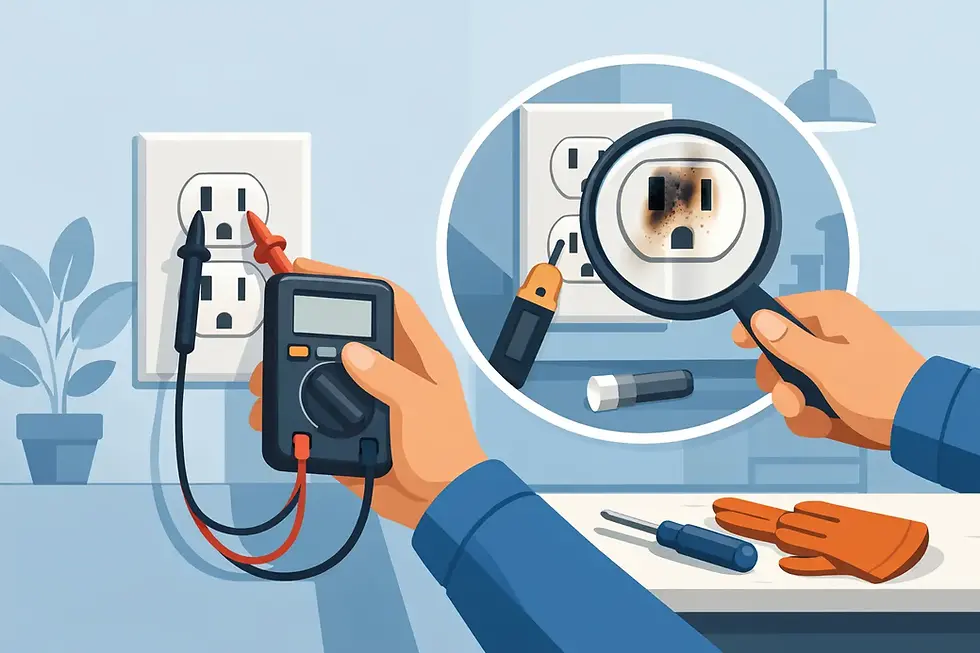
Start with one rule - if you see scorch marks, smell burning, hear buzzing from the panel, or notice warm outlets or switches, stop troubleshooting and get professional help. Those signs can point to loose connections, overloaded circuits, or failing components that should not be handled as a DIY project.
If the issue seems minor, begin with the simplest question: is the problem isolated to one device, one room, or a larger section of the home? That single detail often tells you where to look next. A lamp that does not turn on may be a bad bulb or a failed receptacle. Several dead outlets in one area may point to a tripped GFCI or breaker. Lights dimming throughout the house can suggest a broader load or service issue.
Before touching anything, make sure your hands are dry and the floor is dry. Do not remove panel covers or outlet devices unless you are qualified to do so. Safe troubleshooting for homeowners means observing, testing what is designed to be user-accessible, and stopping before the work moves into repair.
If the power is out in part of the house
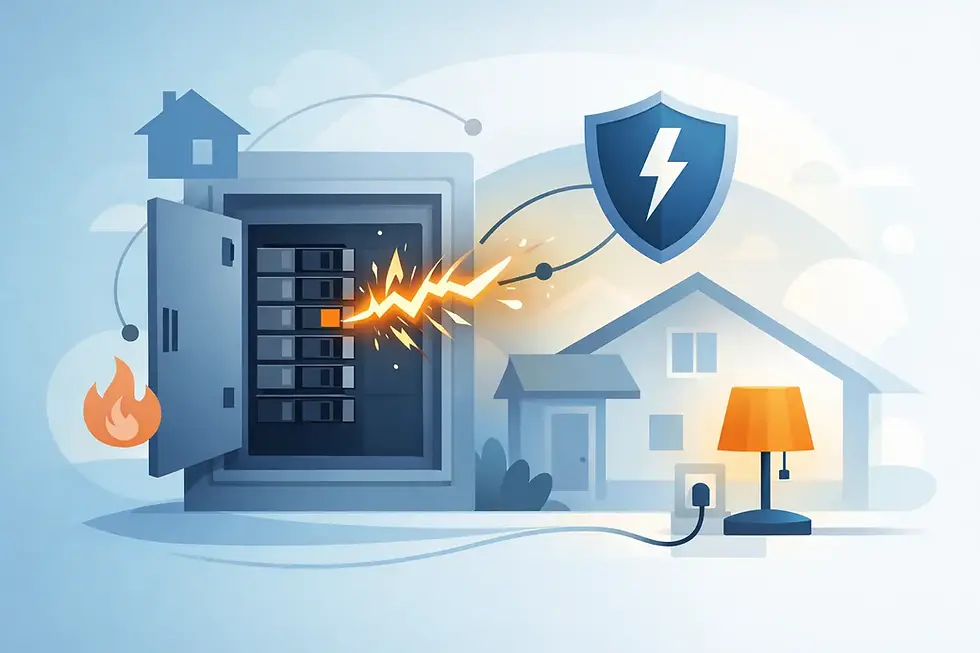
When only part of the house loses power, the first place to check is the electrical panel. Look for a breaker that sits in the middle position or does not line up with the others. To reset it, turn it fully off, then back on. If it trips again right away, leave it off. Repeated tripping is not random. It is the system telling you there is too much demand, a short, or a fault somewhere on that circuit.
Next, check for a tripped GFCI outlet. These are common in kitchens, bathrooms, garages, basements, laundry areas, and outdoor locations. One tripped GFCI can shut off power to several downstream outlets that do not have reset buttons of their own. Press reset once. If it will not reset, there may still be a fault present.
It also helps to think about what changed right before the outage. Did you plug in a space heater, vacuum, air fryer, or holiday lighting? High-demand devices can overload older or heavily used circuits, especially in homes that were not designed for modern electrical needs.
When a breaker keeps tripping
A breaker that trips once after too many devices run at the same time may be doing its job normally. A breaker that trips often deserves more attention. The cause could be overload, but it could also be a damaged appliance, a failing breaker, loose wiring, or a short circuit.
Start by unplugging items on that circuit and resetting the breaker. Then reconnect items one at a time. If the breaker trips when a specific appliance is used, the issue may be with that device. If it trips even with nothing plugged in, the problem is more likely in the wiring, receptacles, switches, or breaker itself.
There is a trade-off here. Homeowners can identify patterns, but they should not keep resetting a breaker over and over to see what happens. That can hide a developing hazard instead of solving it. If a breaker trips repeatedly, the safest move is a professional diagnosis.
Why outlets stop working
A dead outlet does not always mean the outlet itself has failed. It may have lost power because of a tripped breaker, a tripped GFCI, or a loose connection somewhere else on the circuit. In some homes, one failed connection can affect several outlets in a row.
Try a phone charger or small lamp in the outlet to confirm the problem is not the device you were using. Then test nearby outlets. If multiple outlets are out, the issue is likely upstream. If only one outlet is dead, it may be worn out or damaged.
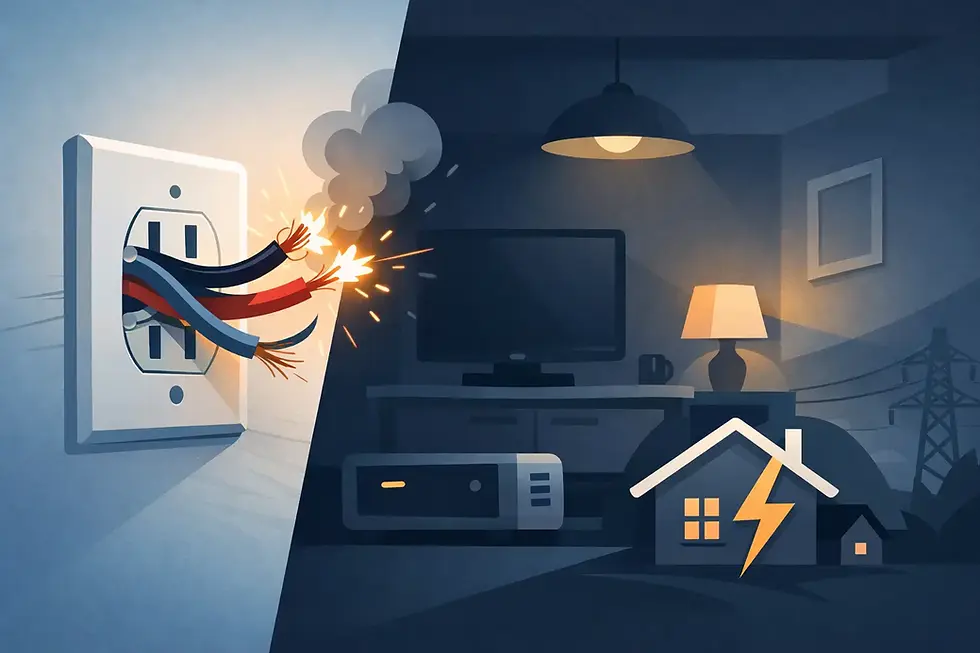
Watch for warning signs that make the answer more urgent: discoloration, melted plastic, sparking, a loose plug fit, or an outlet that feels warm. Those are not wait-and-see problems. Replacing a worn receptacle is often straightforward for a licensed electrician, but continuing to use a damaged one can be risky.
What flickering lights usually mean
Flickering lights can be minor or serious depending on the pattern. If one LED bulb flickers, the bulb itself may be failing or incompatible with the dimmer switch. If one light fixture flickers, the issue may be inside that fixture or switch. If lights dim or flicker when large appliances start, that can point to circuit loading or voltage drop.
The bigger concern is flickering that affects multiple rooms or seems unpredictable. That can indicate a loose connection at the panel, meter, service entrance, or another key point in the system. Those issues deserve prompt professional attention because loose electrical connections can generate heat.
A good way to narrow it down is to note when the flicker happens. Does it happen only with the furnace, air conditioner, microwave, or hair dryer running? Is it tied to one switch? Does it affect only recessed lights, only one floor, or the whole home? Those details help an electrician find the source faster.
When switches act oddly
A switch that crackles, feels warm, works only sometimes, or no longer controls the light reliably should not be ignored. Sometimes the problem is a worn switch. Sometimes it is a loose wire connection in the box. In older homes, aging devices and repeated use can eventually show up as intermittent operation.
If a light works from one switch but not another in a three-way setup, the diagnosis can get more complicated. The issue may be one bad switch, but it can also involve traveler wiring or another connection point. This is where a quick service call often saves frustration.
GFCI outlets that will not reset
A GFCI outlet is designed to shut off power quickly when it senses a ground fault. That is what makes it valuable in areas with moisture. If it trips once during a storm or after a splash near a sink, that may not be unusual. If it trips repeatedly or refuses to reset, there is a reason.
Unplug everything connected to that outlet and any nearby outlets on the same circuit, then try resetting it again. If it still will not reset, the outlet may have failed, moisture may still be present, or there may be a wiring problem further down the line. Because GFCIs are safety devices, replacement and diagnosis should be done correctly, not by trial and error.
Signs your panel may be part of the problem
Not every electrical issue starts at the device. Sometimes the panel is the real source. Warning signs include breakers that trip often, buzzing sounds, rust, heat, burning odors, or circuits that seem inconsistent for no clear reason. Homes with older panels may also struggle simply because the electrical demand has changed over time.
If your home has added appliances, updated lighting, a finished basement, garage equipment, or outdoor electrical features, your panel may be carrying more than it was built to handle. Troubleshooting can identify symptoms, but solving the issue may require panel repair, circuit changes, or a full replacement. That depends on the age, condition, and capacity of the system.
When to stop troubleshooting and call a pro
A practical residential electrical troubleshooting guide should help you know your limits, not push you past them. Homeowners can safely check breakers, reset GFCIs, test a known-working device, and observe patterns. Beyond that, electrical work gets technical quickly.
Call a licensed electrician if you notice repeated breaker trips, flickering in multiple areas, hot outlets or switches, buzzing sounds, burning smells, sparking, or any sign of panel trouble. The same goes for problems in older homes where wiring conditions may be less predictable.
For Omaha homeowners, local service matters here. A residential electrician who works on homes every day understands how to diagnose common household issues, explain the repair clearly, and recommend upgrades that make the system safer and more reliable. Proton Electric takes that homeowner-first approach, with clear service, practical solutions, and help for both urgent problems and planned improvements.
Electrical problems rarely get better by being ignored. If something in your home does not seem right, trust that instinct, check the basics safely, and get the right help before a small issue becomes an expensive one.
Comments