
7 Signs of Overloaded Circuits at Home
- Derek Curtis
- May 14
- 6 min read
You plug in a space heater, start the microwave, and suddenly the breaker trips again. That kind of pattern is one of the clearest signs of overloaded circuits, and it is not something homeowners should ignore. When a circuit is carrying more electrical demand than it was designed to handle, your system starts sending warnings. Some are obvious. Others are easy to brush off until they turn into damaged wiring, repeated outages, or a real safety risk.
In many Omaha homes, overloaded circuits show up because the way people use electricity has changed faster than the wiring behind the walls. Older homes were not built for today’s kitchen appliances, entertainment setups, home offices, garage tools, and charging stations. Even newer homes can run into problems when one area of the house ends up supporting more devices than planned.
What overloaded circuits actually mean
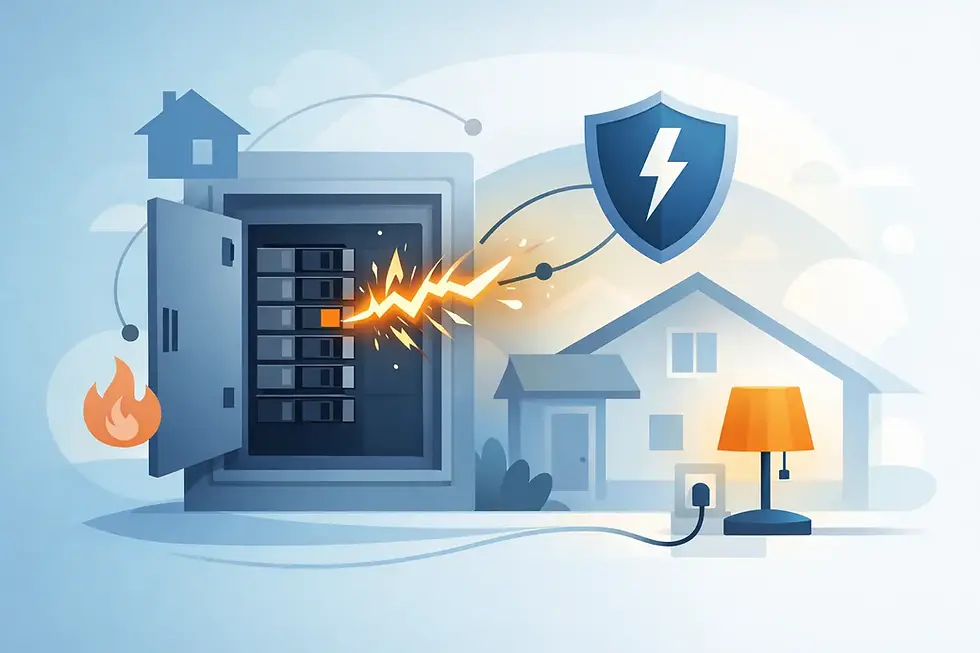
An overloaded circuit happens when too many lights, appliances, or devices are drawing power from the same branch circuit at the same time. Every circuit has a limit based on the wire size, breaker rating, and intended use. Once demand pushes past that limit, heat builds up and the breaker is supposed to shut the circuit off before the wiring is damaged.
That protective shutdown is a good thing. The problem starts when homeowners treat it like a minor annoyance instead of a warning. If a circuit keeps overloading, the real fix is usually reducing the demand on that line, redistributing loads, or upgrading the electrical system where needed.
Common signs of overloaded circuits
Some warning signs appear all at once. Others build gradually over time. If you notice more than one of these symptoms, it is a strong signal that your home needs a closer look.
Breakers trip repeatedly
A breaker that trips once after an unusual power spike is not always alarming. A breaker that trips whenever you run the toaster and coffee maker together is different. Repeated tripping usually means the circuit is working harder than it should.
This is especially common in kitchens, bathrooms, garages, and finished basements where several high-demand devices may be in use at the same time. If resetting the breaker has become part of your routine, the issue is no longer routine.
Lights dim when appliances turn on
If your lights flicker or dim when the microwave starts, the vacuum runs, or a hair dryer kicks on, your system may be struggling with the load. Small, occasional fluctuations can happen, but regular dimming is worth attention.
This can point to an overloaded circuit, but it can also suggest loose connections or service issues. That is why the pattern matters. If the dimming happens consistently when a certain appliance starts up, it is a clue that the circuit may be near or over capacity.
Outlets or switches feel warm
Outlets and switches should not feel hot to the touch. Slight warmth from a dimmer switch can be normal in some cases, but noticeable heat from a standard outlet or wall switch is not. Heat means electrical resistance is building somewhere, and overloaded wiring is one possible cause.
This is one of those warning signs that should not wait. If you notice warmth, stop using that outlet or switch until it can be checked.
Buzzing sounds from outlets or panels
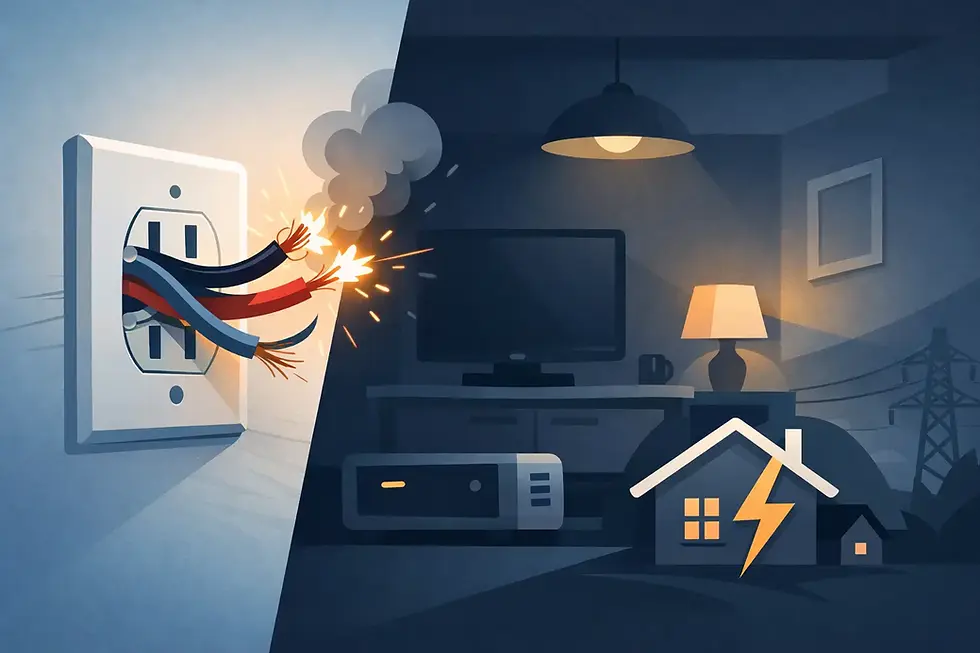
Electricity should be quiet. A faint hum from certain devices can be normal, but buzzing or crackling from an outlet, switch, or breaker panel is not. It can mean arcing, a loose connection, or a circuit under stress.
Overloaded circuits do not always buzz, so this sign alone does not confirm the cause. But it does tell you something is wrong and needs professional attention.
Burning smells or discolored outlets
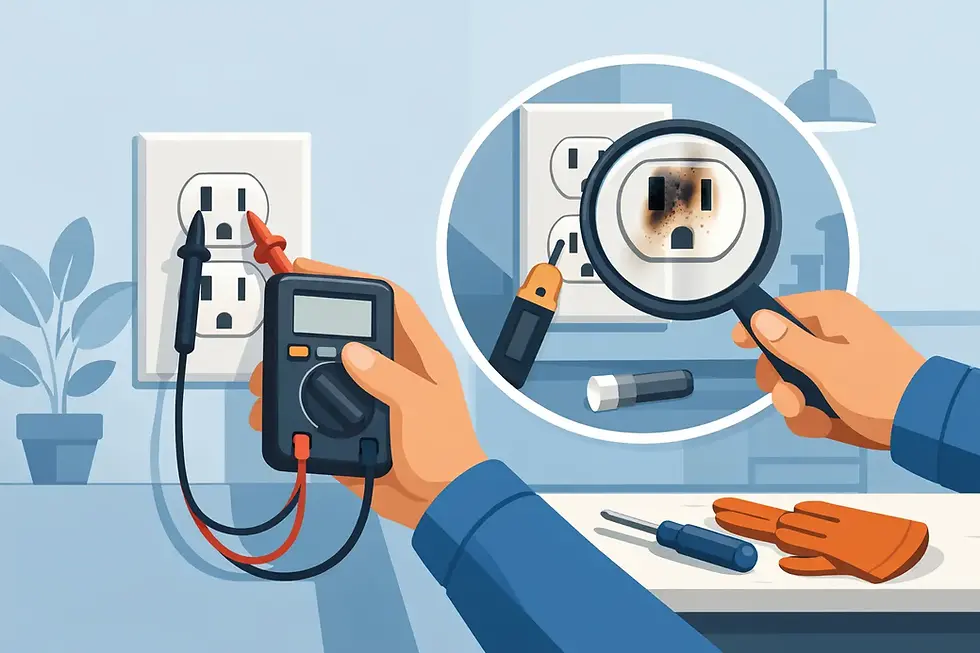
A burning odor near an outlet, switch, or panel is a serious red flag. So are faceplates that look yellowed, scorched, or browned around the edges. These can indicate overheating behind the wall.
Sometimes homeowners notice the smell before they see visible damage. Sometimes it is the opposite. Either way, turn off power to the affected area if you can do so safely and call an electrician right away.
Extension cords become permanent solutions
Using a power strip now and then is one thing. Relying on extension cords every day because there are not enough outlets where you need them is another. That often means your home’s original electrical layout no longer fits how you live.
This does not automatically mean the circuit is overloaded, but it raises the risk. Multiple devices plugged into one outlet through adapters, splitters, or daisy-chained strips can push a circuit beyond its safe limit.
Appliances do not run at full power
Sometimes the warning signs are subtle. A vacuum that seems weaker in one room, a window AC unit that struggles, or kitchen appliances that perform inconsistently can be clues. If a circuit is overloaded, voltage may drop enough to affect how equipment operates.
Appliance problems can have many causes, so this one depends on the situation. But if several devices act up on the same circuit, it is worth investigating.
Why overloaded circuits happen
The most common cause is simple. Homes are being asked to do more than they were originally wired to do. A bedroom that once powered a lamp and alarm clock may now handle a TV, gaming system, computer, phone chargers, and portable heater. A garage may now support a freezer, battery chargers, and power tools.
Older electrical panels can also play a role. If the panel is outdated, undersized, or already full, the home may not have enough properly distributed circuits to support modern use. In other cases, the problem is very localized. One room or one circuit was just not designed for heavy-demand appliances.
Seasonal habits matter too. Winter space heaters and holiday lighting often expose overloaded circuits fast. In summer, window AC units and extra outdoor equipment can do the same.
What not to do when a circuit is overloaded
When the breaker trips, it can be tempting to reset it and move on. If that solves the issue once, fine. If it keeps happening, repeated resets are not a fix. Neither is swapping in a larger breaker. That is dangerous because the wiring may not be rated for the higher amperage, which increases fire risk.
It is also not a good idea to keep adding power strips to a room that already has limited outlet capacity. That may feel convenient, but it often stacks more demand onto the same circuit.
What homeowners can do first
Start by noticing patterns. Which breaker trips? What was running at the time? Do lights dim only in one part of the house or throughout the home? Those details help identify whether the issue is isolated or part of a larger electrical problem.
You can also unplug some devices and spread usage out when possible. For example, avoid running multiple heat-producing appliances on the same circuit at once. That may reduce immediate strain, but it is not always a long-term answer.
If you are regularly adjusting your routine just to keep the power on, your electrical system is telling you it needs attention.
When to call a professional about signs of overloaded circuits
If you are seeing repeated breaker trips, warm outlets, flickering lights, or any burning smell, it is time to bring in a licensed electrician. The right solution depends on the cause. Sometimes it is a dedicated circuit for a specific appliance. Sometimes it is replacing worn devices or correcting a bad connection. In other homes, a panel upgrade makes the most sense because the electrical demand has outgrown the existing setup.
A professional inspection can also tell you whether the issue is truly overload, faulty wiring, a failing breaker, or a combination of problems. That matters because the fix should match the actual risk, not just the symptom.
For homeowners in Omaha, this is one of those issues where fast action protects more than convenience. It protects your appliances, your wiring, and the people living in the home. Proton Electric works with residential customers on troubleshooting, repairs, and panel upgrades when the system is no longer keeping up.
If your home has started showing signs of overloaded circuits, trust what you are seeing. Electrical systems usually give warnings before bigger failures happen, and catching them early is one of the smartest home maintenance decisions you can make.
Comments