
How to Spot Faulty Outlets at Home
- Derek Curtis
- May 4
- 5 min read
That outlet behind the couch usually gets ignored until a lamp starts flickering, a charger falls out, or you catch a faint burning smell and wonder if you imagined it. Knowing how to spot faulty outlets can help you act before a small wiring issue turns into a repair emergency.
Most outlet problems do not start with a dramatic spark. They show up in quieter ways - warm faceplates, loose plugs, random power loss, or breakers that trip when you use one specific receptacle. For homeowners in Omaha, these are worth paying attention to, especially in older homes or rooms with heavy appliance use.
Why outlet problems should not be brushed off
An outlet is a small device, but it is tied directly to the safety and function of your home's electrical system. When an outlet is damaged, worn out, improperly wired, or overloaded, it can stop working reliably or create a fire risk.
Sometimes the problem is limited to the receptacle itself. Other times, the outlet is only the symptom. Loose wiring in the box, a failing connection on the circuit, moisture exposure, or an aging panel can all show up first at the outlet. That is why recurring outlet issues deserve a closer look instead of a quick workaround.
How to spot faulty outlets before they fail completely
A faulty outlet usually gives you clues. The key is knowing which ones matter and which ones call for immediate attention.
The outlet feels warm or hot
A slightly warm plug on a high-use device can happen, but the outlet faceplate itself should not feel hot. Heat often points to a loose connection, overloaded circuit, or internal damage in the outlet. If it feels noticeably warm during normal use, stop using it until it is inspected.
This is one of the more serious warning signs because heat means electricity is not flowing cleanly through the connection. That extra resistance can damage the outlet further over time.
You notice discoloration or scorch marks
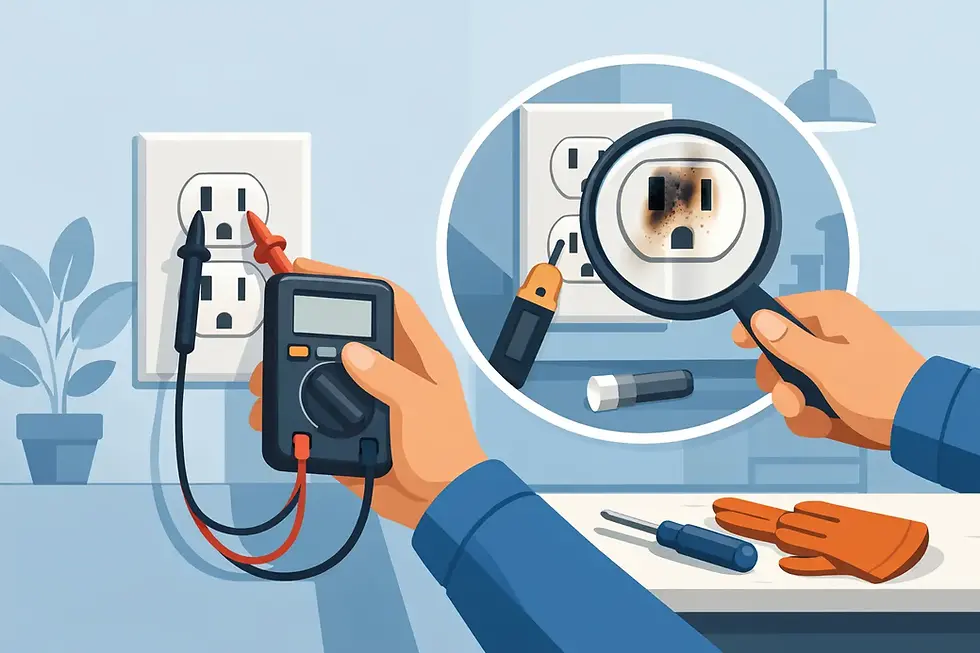
Brown, black, or yellowish marks around the slots are not normal wear. They can indicate arcing, overheating, or previous electrical damage. Cracked plastic around the receptacle is another sign the outlet may have been exposed to excessive heat.
Even if the outlet still works, visible damage means it should be replaced and the wiring behind it checked. A new faceplate alone is not a fix.
Plugs fall out or fit loosely
If a plug slides out easily or will not stay firmly seated, the internal contacts in the outlet may be worn down. This is common in older outlets that have seen years of daily use.
A loose connection can lead to intermittent power, small arcs, and heat buildup. It may seem minor, but it is one of the clearest signs an outlet is reaching the end of its service life.
Power cuts in and out
An outlet that works one day and not the next, or only powers a device when the cord is held at a certain angle, is not dependable. This could mean the receptacle is failing internally, but it can also point to a loose wire connection in the box.
If one outlet goes dead, check whether a GFCI outlet elsewhere has tripped. Bathrooms, kitchens, garages, basements, and exterior outlets are often connected this way. If resetting the GFCI does not restore power, the issue needs professional diagnosis.
You hear buzzing or crackling
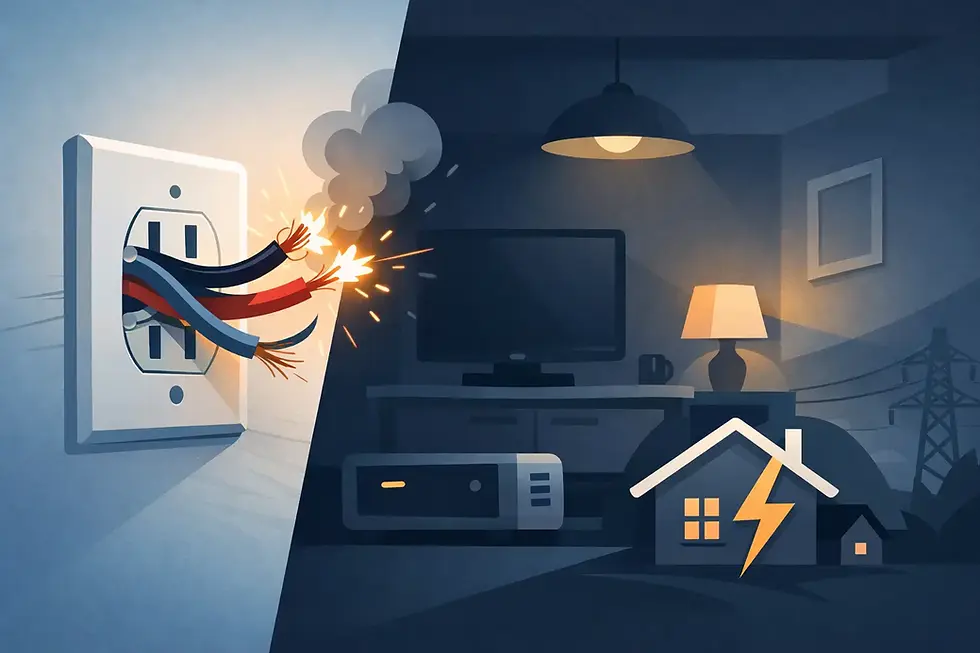
Outlets should be quiet. A faint buzz, crackle, or sizzling sound can mean a loose wire, improper installation, or arcing. That is not something to monitor and wait on.
Turn off power to that outlet at the breaker if you can identify it safely, and stop using the device. Sound from an outlet is a strong sign something is wrong behind the cover.
There is a burning smell
A burnt or fishy odor near an outlet is a serious warning sign. Smell often appears before visible damage does. If the odor is strongest near the receptacle, unplug everything from it and shut off the circuit if possible.
Do not keep testing the outlet to see if it still works. Burning smell means it needs immediate attention.
The breaker trips when that outlet is used
Occasional breaker trips can happen when too many devices are running on one circuit. But if the breaker trips whenever you use one specific outlet, the problem may be with the outlet, the wiring feeding it, or the device plugged into it.
It depends on the pattern. If multiple appliances on different outlets trigger the same breaker, the circuit may be overloaded. If one receptacle seems to trigger it repeatedly, that outlet deserves inspection.
Common places where faulty outlets show up
Some outlets see more wear than others. Kitchens often have heavy daily demand from small appliances. Bathrooms and outdoor areas deal with moisture. Garages and basements can have temperature swings, dust, and extension-cord misuse.
Older living rooms and bedrooms can also be trouble spots, especially when two-prong outlets, aging receptacles, or DIY replacements are involved. If your home has outlets that look different from room to room, that can be a clue that updates happened over time and not always consistently.
What homeowners can check safely
There are a few basic observations you can make without opening anything up. First, unplug devices and look at the outlet face for cracks, discoloration, looseness, or signs of melting. Then test whether plugs fit securely and whether the cover plate feels warm.
You can also press the test and reset buttons on GFCI outlets to confirm they respond correctly. If a GFCI will not reset, keeps tripping, or has no power at all, that points to a problem worth evaluating.
What you should not do is remove the cover, replace the outlet live, or assume a dead receptacle is harmless. Even when an outlet seems simple, the issue behind it may involve loose conductors, damaged insulation, or a larger circuit problem.
When the issue may be bigger than the outlet
If you are seeing multiple dead outlets, flickering lights in the same area, or breakers tripping more often than they used to, the outlet may only be part of the story. Wiring connections can loosen over time. Older homes may have outdated devices or circuits that no longer match how the home is used. In some cases, panel issues show up as unreliable performance at the receptacle level.
This is where experience matters. Replacing one outlet may solve the problem if the device is worn out. But if the same issue returns, or several outlets act up at once, the safer approach is to diagnose the circuit instead of swapping parts and hoping for the best.
When to call an electrician
You should call for professional help right away if an outlet is hot, smells burnt, shows scorch marks, makes noise, or trips the breaker repeatedly. Those are not wait-and-see problems.
It also makes sense to call if your outlets are outdated, ungrounded, loose, or not meeting the needs of your household anymore. A properly replaced outlet can improve safety, but so can upgrading GFCI protection, correcting wiring issues, or replacing devices that have simply worn out.
For Omaha homeowners, this kind of service is often straightforward when caught early. Proton Electric helps homeowners troubleshoot outlet issues, replace damaged devices, and make sure the problem is actually solved at the source.
A quick note on old outlets and modern use
Many homes were built before families had today’s mix of chargers, kitchen gadgets, entertainment systems, and home office equipment. An outlet that was adequate years ago may now be handling more daily use than it was designed for.
That does not automatically mean your home is unsafe, but it does mean wear shows up faster. If outlets are loose, frequently used, or showing any of the warning signs above, replacement is often a smart maintenance step rather than an emergency response.
A reliable outlet should hold a plug firmly, deliver steady power, and stay cool and quiet while doing its job. If one in your home is doing anything else, trust that signal and get it checked before it becomes a bigger repair.
Comments