
What Causes Breaker Tripping at Home?
- Derek Curtis
- Apr 28
- 6 min read
A breaker that trips once during a storm might be a fluke. A breaker that keeps shutting off the same room, appliance, or outlet is your electrical system telling you something is wrong. If you are wondering what causes breaker tripping, the answer usually comes down to overloads, short circuits, ground faults, or a breaker or panel problem that needs closer attention.
For homeowners, the bigger issue is not just inconvenience. A tripping breaker is a safety device doing its job. Resetting it over and over without finding the cause can leave you dealing with damaged wiring, ruined appliances, or a growing fire risk behind the walls.
What causes breaker tripping most often?
In most homes, breaker tripping happens because the circuit is carrying more electrical demand than it was designed to handle. That can be as simple as running a space heater and microwave on the same kitchen circuit, or as serious as a damaged wire creating a fault.
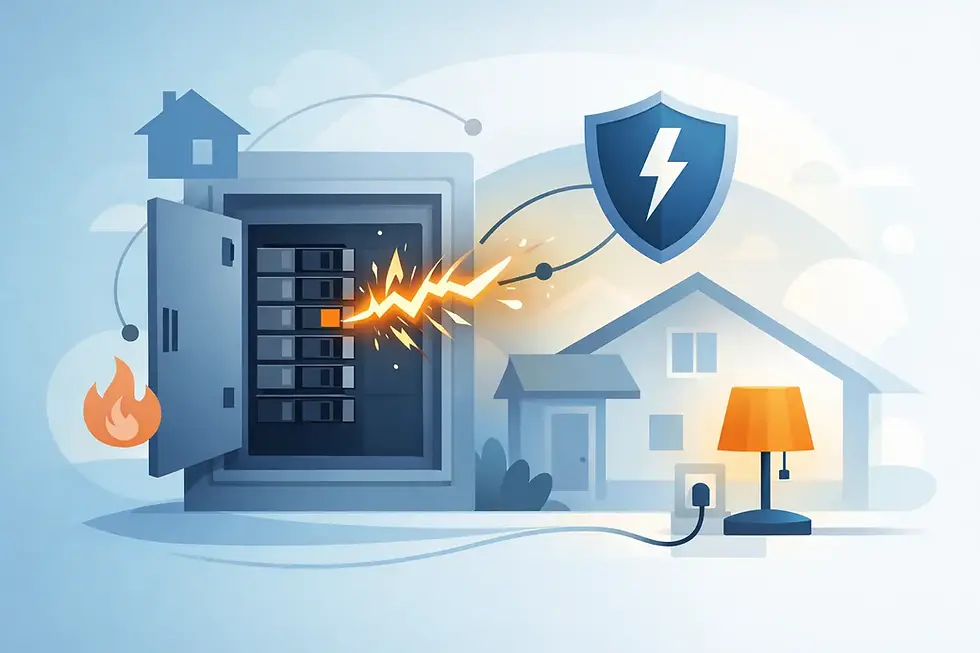
A breaker monitors electrical current on a specific circuit. When the current rises too high or flows in an unsafe way, the breaker shuts off power to protect the wiring. That quick shutoff is what prevents overheating and more serious damage.
The cause is not always dramatic. Sometimes it is a single high-draw appliance. Sometimes it is a combination of everyday devices that slowly pushes an older circuit past its limit. In other cases, the wiring, outlet, or breaker itself is the real problem.
Circuit overloads
Overloads are the most common reason a breaker trips. This happens when too many lights, devices, or appliances are pulling power from the same circuit at the same time.
You might notice this in a bedroom where a portable heater, TV, lamp, and phone chargers are all plugged in, or in a bathroom where a hair dryer trips the breaker every morning. The circuit may work fine most of the time, then fail as soon as one more item turns on.
This is especially common in older homes that were not built for modern electrical demand. Years ago, homeowners were not charging multiple devices, running large entertainment setups, or adding countertop appliances in every room. If your home has older wiring or an outdated panel, normal daily use can strain the system.
Short circuits
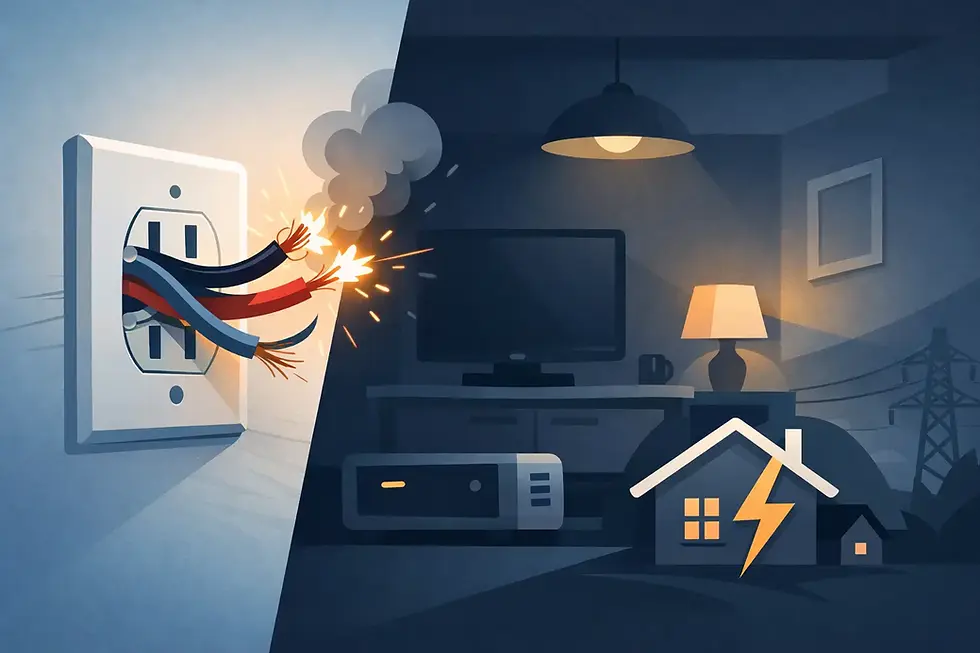
A short circuit is more serious. It happens when a hot wire touches a neutral wire or another unintended path, causing a sudden surge of current. The breaker trips almost instantly to stop that unsafe flow.
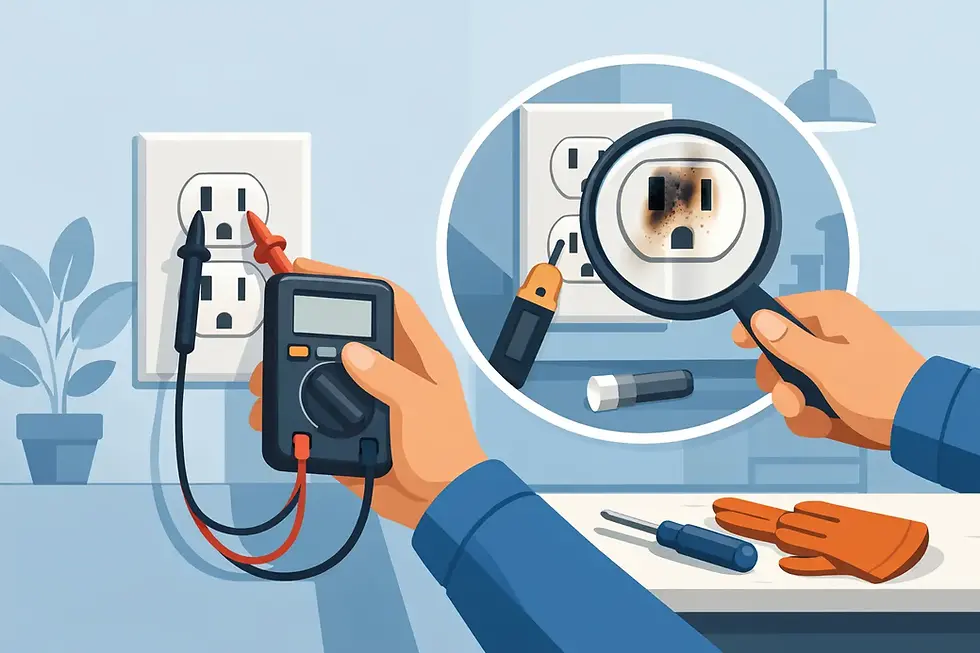
Signs of a possible short circuit can include a breaker that trips immediately when reset, a burning smell, discoloration around an outlet, or buzzing from a switch or receptacle. A short can be caused by damaged wiring, a loose connection, a failed outlet, or an issue inside an appliance.
This is not something to guess at. If a breaker snaps off right away and will not stay on, stop resetting it and have the circuit inspected.
Ground faults
Ground faults are similar to short circuits, but the electricity is flowing to ground instead of following its normal path. These often happen where moisture is present, such as kitchens, bathrooms, garages, basements, and outdoor areas.
If a bathroom outlet or exterior receptacle trips a breaker, moisture intrusion or a damaged device may be the cause. Ground fault protection is meant to react quickly because the risk of shock is higher in these areas.
Sometimes the issue is not the breaker itself but a GFCI outlet that has tripped. Other times, the breaker at the panel is responding to a true fault somewhere along the line. The details matter, because the fix could range from replacing a bad outlet to repairing damaged wiring.
Appliances that commonly trip breakers
Some breaker problems only show up when a specific appliance runs. That is a clue worth paying attention to.
High-demand equipment like microwaves, refrigerators, dishwashers, garbage disposals, space heaters, hair dryers, air conditioners, and treadmills can trip a breaker if they share a circuit or if the appliance is starting to fail. Motors are especially hard on circuits because startup demand can spike briefly before settling down.
If the breaker only trips when one appliance turns on, there are two likely possibilities. Either the appliance is drawing too much power for that circuit, or the appliance has an internal fault. A dedicated circuit may be needed, especially for larger kitchen, laundry, or garage equipment.
Extension cords and power strips can make this worse. They do not increase the circuit's capacity. They just make it easier to plug too many things into one place.
What causes breaker tripping in older panels?
Sometimes the problem is not what you plugged in. It is the age or condition of the electrical equipment.
Older breakers can wear out over time. A breaker that has tripped repeatedly for years may become weak and start tripping more easily than it should. In that case, the breaker may need replacement. Still, that should only be confirmed after checking whether the circuit is actually overloaded or faulty.
Older electrical panels can also struggle to support the way families use power today. If you are adding recessed lighting, upgrading kitchens, finishing a basement, or using more electronics than the home originally supported, your panel may be undersized. Frequent breaker trips across multiple parts of the home can be a sign that the system needs a broader evaluation.
There is a trade-off here. Replacing a single breaker may solve one isolated issue. But if your home has recurring electrical problems in several rooms, the smarter long-term fix may be a panel upgrade that improves safety and everyday convenience.
When tripping points to a hidden wiring issue
Some breaker trips seem random, but the real problem is hidden in the walls, attic, crawl space, or a damaged device box.
Loose connections can create heat and intermittent faults. Rodent damage can expose wiring. Aging insulation can crack. A switch or outlet may look normal from the outside while the wiring behind it is deteriorating.
This is one reason homeowners should be careful about assuming the breaker is the issue. The breaker may be responding correctly to a deeper problem. If you notice warm outlets, flickering lights, scorch marks, buzzing, or a breaker that trips without an obvious appliance load, it is time for professional troubleshooting.
What you can safely check before calling
There are a few practical steps you can take without opening the panel or doing your own electrical repairs.
Start by noticing patterns. Does the breaker trip when the same appliance runs, when several devices are on at once, or during rain or high humidity? That information helps narrow down the cause.
Next, unplug or turn off items on the affected circuit and reset the breaker once. If it holds, plug items back in one at a time. If the breaker trips again when a certain device starts, that device or the circuit capacity may be the problem.
You can also check for obvious warning signs like damaged cords, loose plugs, or moisture near outlets. What you should not do is keep forcing a breaker back on, replace it yourself without diagnosis, or ignore burning odors and heat.
When to call an electrician
A breaker that trips occasionally after obvious overload is one thing. A breaker that trips repeatedly, trips immediately, smells hot, or affects critical appliances is another.
Call an electrician if the breaker will not reset, if the same circuit keeps failing, if outlets or switches show signs of damage, or if your panel is older and your home is outgrowing it. This is also the right move if you are planning upgrades and want to avoid future nuisance trips by adding dedicated circuits or replacing outdated equipment.
For Omaha homeowners, quick service matters because electrical issues rarely happen at a convenient time. A professional diagnosis can tell you whether the fix is simple, such as replacing a worn device, or whether the home needs a safer long-term improvement like circuit changes or panel replacement.
At Proton Electric, the goal is to help homeowners fix the problem at the source, not just reset the symptom. That means safer wiring, more reliable power, and fewer interruptions in daily life.
A tripping breaker is not your home being difficult. It is your electrical system asking for attention before a small problem turns into a bigger one.
Comments