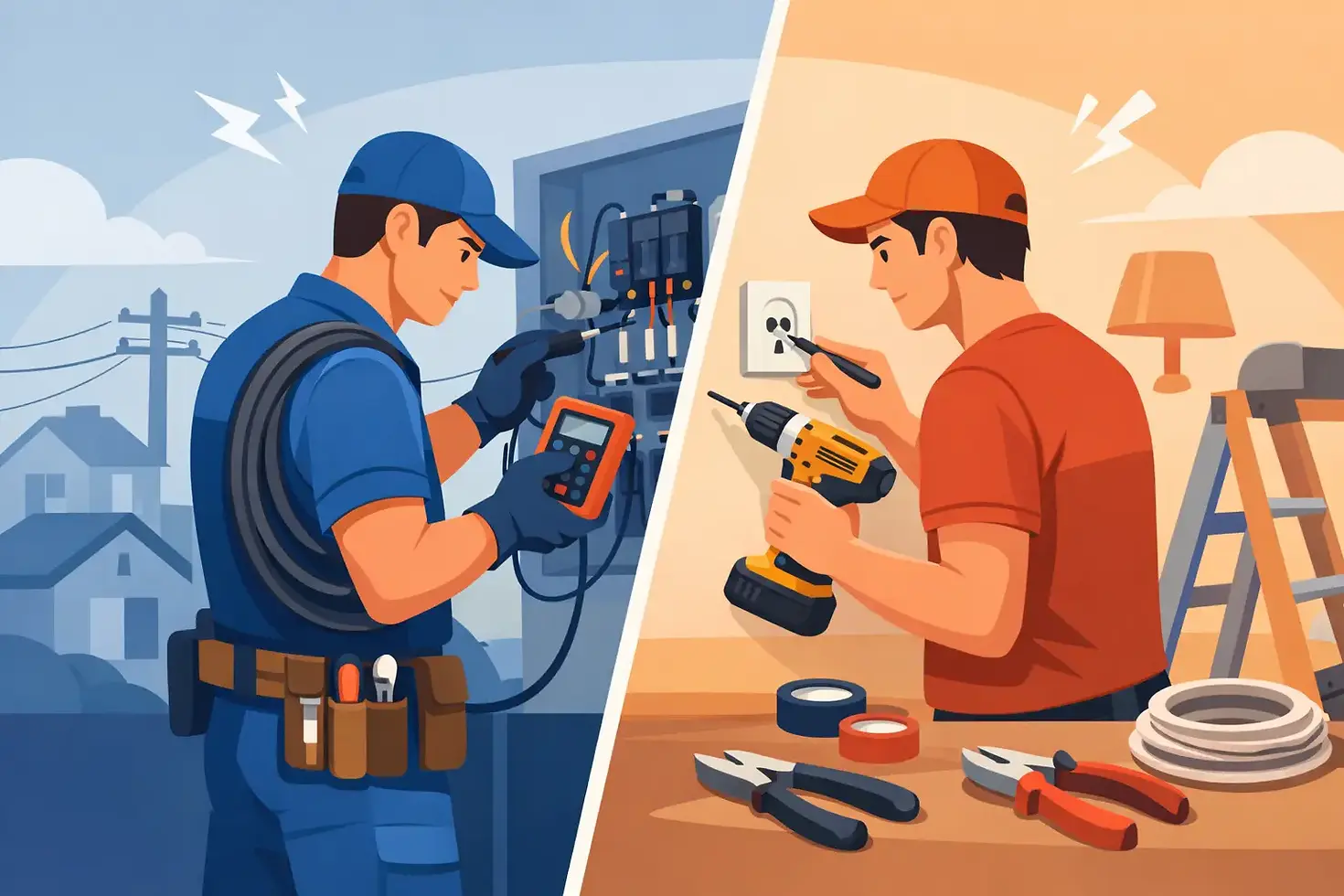
Professional Electrician Versus DIY
- Derek Curtis
- Jun 17
- 5 min read
YouTube makes replacing a switch look easy - right up until the breaker label is wrong, the wire colors do not match the video, or the problem turns out to be in the panel instead of the device. That is where the real professional electrician versus DIY decision starts for homeowners. It is not just about saving money. It is about safety, code compliance, time, and whether the fix actually solves the problem.
For many Omaha homeowners, the line between a simple home project and a job that needs a licensed electrician is not always obvious. Some electrical tasks are low-risk and manageable if you are careful. Others carry fire, shock, and property damage risks that are easy to underestimate. The smartest approach is not avoiding DIY completely. It is knowing where DIY makes sense and where professional help protects your home.
Professional electrician versus DIY: what really changes?
The biggest difference is not just skill with tools. A professional electrician brings training, troubleshooting experience, and an understanding of how one issue can affect the rest of the system. Home electrical work is rarely as isolated as it looks. A flickering light may be caused by a loose connection at the fixture, but it could also point to a failing switch, overloaded circuit, damaged wiring, or a panel issue.
DIY work usually starts with the visible symptom. Professional work starts with diagnosis. That matters because replacing the wrong part can waste money and leave the real hazard in place.
There is also the matter of code. Residential electrical systems need to meet current standards for safety and performance. Homeowners often focus on whether something turns back on. Electricians also look at grounding, box fill, arc fault and GFCI protection, proper device ratings, and whether the installation is safe behind the wall - not just at the surface.
When DIY can make sense
There are a few situations where a careful homeowner may be able to handle basic electrical-related tasks safely. These are usually simple jobs with low complexity and little need for system-wide troubleshooting. Swapping light bulbs, resetting a tripped breaker once, testing GFCI outlets, or replacing batteries in smoke alarms are common examples.
Some homeowners also feel comfortable replacing a cover plate, installing a new light fixture in a location with known, clearly identified wiring, or swapping a worn receptacle like-for-like. Even then, the job needs caution. The power must be shut off and verified, the wiring must be in good condition, and the replacement must match the circuit and box setup.
The issue is that many jobs that appear simple are only simple when everything is normal. Older homes, previous handyman work, crowded boxes, double-tapped wires, missing grounds, or deteriorated insulation can turn a basic device replacement into a larger repair. If anything looks unusual once the cover comes off, DIY usually stops being the smart option.
When a professional electrician is the better call
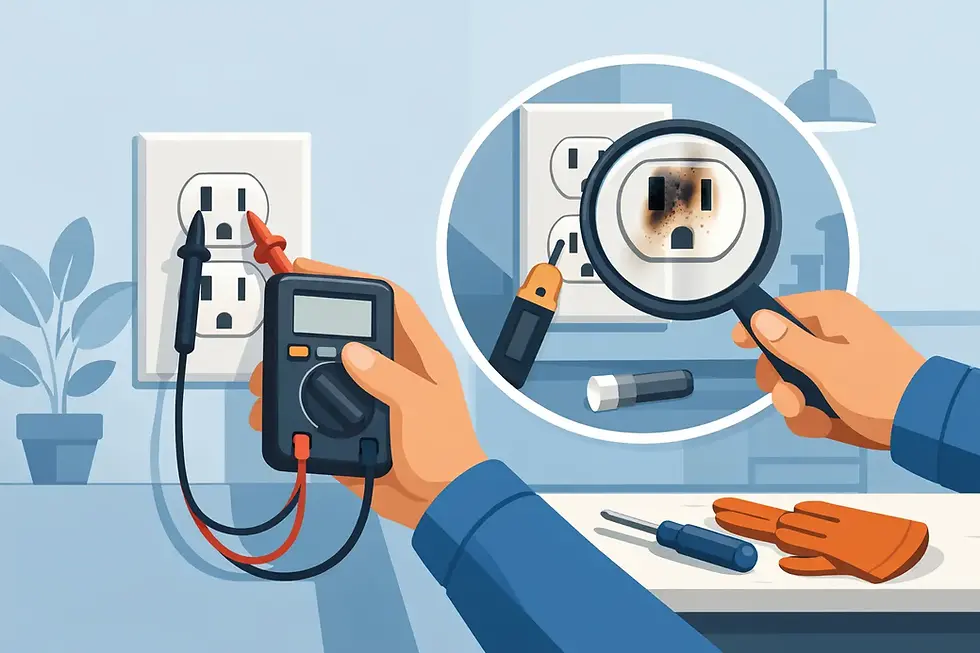
If the work involves your panel, service equipment, new circuits, recurring breaker trips, warm outlets, buzzing sounds, or lights that flicker for no clear reason, it is time to bring in a licensed electrician. These problems often point to conditions that need more than a quick replacement.
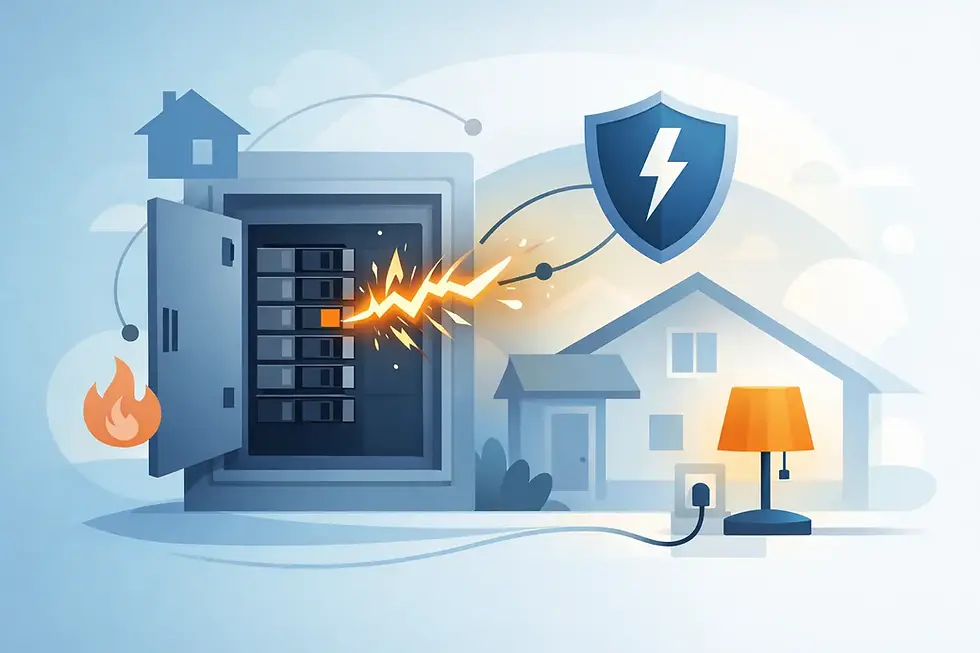
Panel work deserves special caution. Even with the main breaker shut off, parts of the panel can remain energized. That is not the place for trial and error. The same goes for troubleshooting hidden issues inside walls, adding wiring for remodeling projects, and replacing outdated electrical equipment.
A professional is also the better choice when the job affects the safety or value of the home. If you are upgrading lighting, replacing devices throughout the house, installing landscape lighting, or planning a panel replacement, quality matters just as much as function. Good electrical work should improve daily life and hold up over time, not just get through the weekend.
Cost is only one part of the equation
DIY often looks cheaper at first because you are comparing your own labor to a service call. That is understandable. Homeowners want value, especially when the repair was unexpected.
But the real cost comparison is broader. DIY can involve tool purchases, replacement parts, extra trips to the store, and hours spent diagnosing a problem that still is not fixed. If the repair is done incorrectly, the cost can climb quickly through damaged devices, drywall repairs, appliance issues, or the need to redo the work properly.
Professional service costs more upfront, but it often saves time and reduces risk. You are paying for experience, accurate diagnosis, and work that is more likely to be completed correctly the first time. In many cases, that is the more economical choice over the life of the repair.
Safety is where professional electrician versus DIY becomes clear
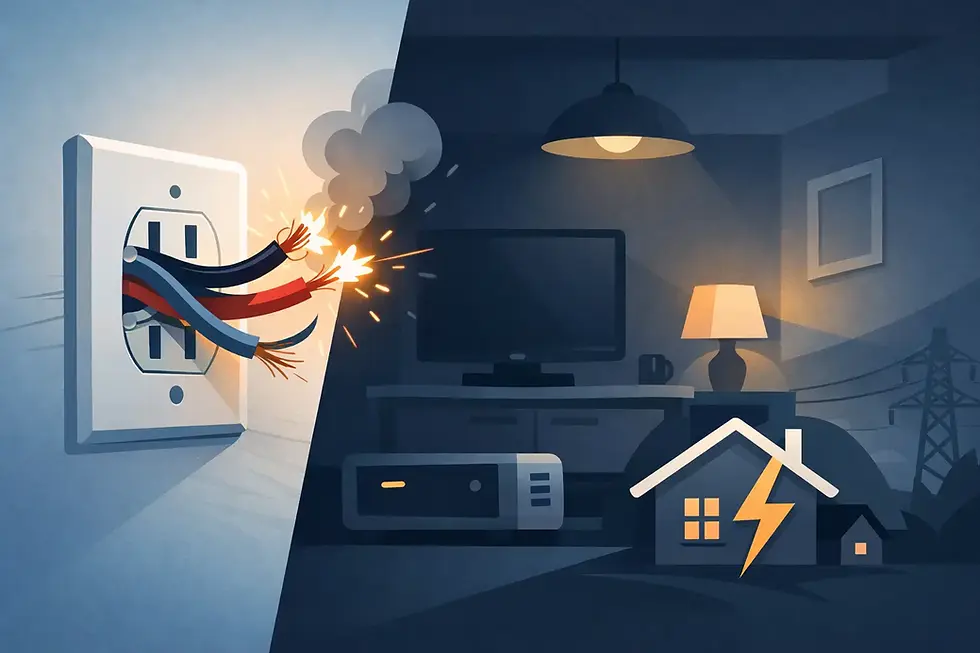
Electricity does not give much warning before something goes wrong. A loose connection may work for weeks before it overheats. An incorrectly installed device may seem fine until it fails under load. That is one reason electrical mistakes can be more serious than errors in other home projects.
Shock risk is the obvious concern, but fire risk is just as important. Poor terminations, mismatched devices, overfilled boxes, and hidden wiring damage can all create problems that are not immediately visible. Homeowners sometimes assume that if the breaker did not trip, the work must be safe. That is not always true.
A licensed electrician is trained to spot those less obvious hazards. They know what to look for when a symptom points to a deeper issue and how to make repairs that protect the system as a whole. That level of judgment is hard to replicate with online tutorials.
Older homes need extra caution
Many homes have a mix of original wiring, past repairs, and newer additions. That patchwork can make DIY work more unpredictable. You might open a box expecting a standard replacement and find outdated wiring methods, improper splices, or signs of heat damage.
Older electrical systems are also more likely to need upgrades rather than spot fixes. If your home has limited outlets, inconsistent lighting, or a panel that no longer supports modern demand, repeated DIY repairs may only delay the real solution. At that point, a professional assessment can save frustration and help you prioritize improvements that make the home safer and more functional.
Convenience matters too
Most homeowners are not deciding between DIY and a professional because they enjoy risk. They are trying to solve a problem quickly. The challenge is that electrical issues often take longer than expected, especially when the cause is not obvious.
A project that starts on a Saturday morning can turn into a half-finished repair by Sunday evening. If the lights are still out, the switch still does not work, or the breaker keeps tripping, convenience starts to matter as much as price.
That is why many homeowners choose experienced residential electricians for troubleshooting, device replacement, lighting upgrades, and panel work. A local company like Proton Electric can provide a clear estimate, practical options, and work focused on what homeowners actually need - safe repairs, dependable performance, and less disruption at home.
How to make the right call for your home
A simple rule helps. If the task is basic, low-risk, and fully understood before you start, DIY may be reasonable. If the job involves diagnosis, hidden wiring, the panel, repeated electrical problems, or anything that makes you hesitate, call a professional.
It also helps to ask a better question than Can I do this myself? Ask What happens if I am wrong? If the answer is inconvenience, maybe the risk is manageable. If the answer is shock, fire, code issues, or damage to your home, professional service is the smarter move.
Electrical work should leave your home safer and more reliable than it was before. That is the standard worth using, whether you are replacing one device or planning a larger upgrade.
If you are standing in front of an outlet, switch, or panel and feeling unsure, that hesitation is useful. It usually means you have reached the point where expert help is the better investment for your home and your peace of mind.
Comments