
How to Test a Dead Outlet Safely at Home
- Derek Curtis
- 2 days ago
- 5 min read
A dead outlet can be more than an inconvenience when it takes out a phone charger, kitchen appliance, sump pump, or home office setup. Knowing how to test a dead outlet helps you rule out a simple reset before assuming the receptacle itself has failed. The key is to check the safest, most common causes first and avoid opening electrical boxes unless you are qualified to do so.
Start With the Device and Outlet
Before testing the electrical system, make sure the problem is actually the outlet. Plug a small lamp, phone charger, or another device you know works into the outlet. Avoid using a major appliance for this first check. If the second device works, the issue is likely with the original appliance, cord, or charger.
If the outlet is clearly dead, look for visible warning signs without touching the receptacle slots. A warm cover plate, buzzing sound, burning odor, discoloration, cracked plastic, or a plug that will not stay in place calls for a professional electrician. Turn off the circuit breaker if you can identify it, and do not continue testing a damaged outlet.
A standard plug-in outlet tester can provide a useful initial reading on a normal three-prong receptacle. These inexpensive testers use indicator lights to show some common wiring faults. They are helpful, but they are not a complete diagnosis. A tester may indicate that an outlet is wired correctly even when a loose connection elsewhere on the circuit is causing intermittent power.
How to Test a Dead Outlet at the Breaker Panel
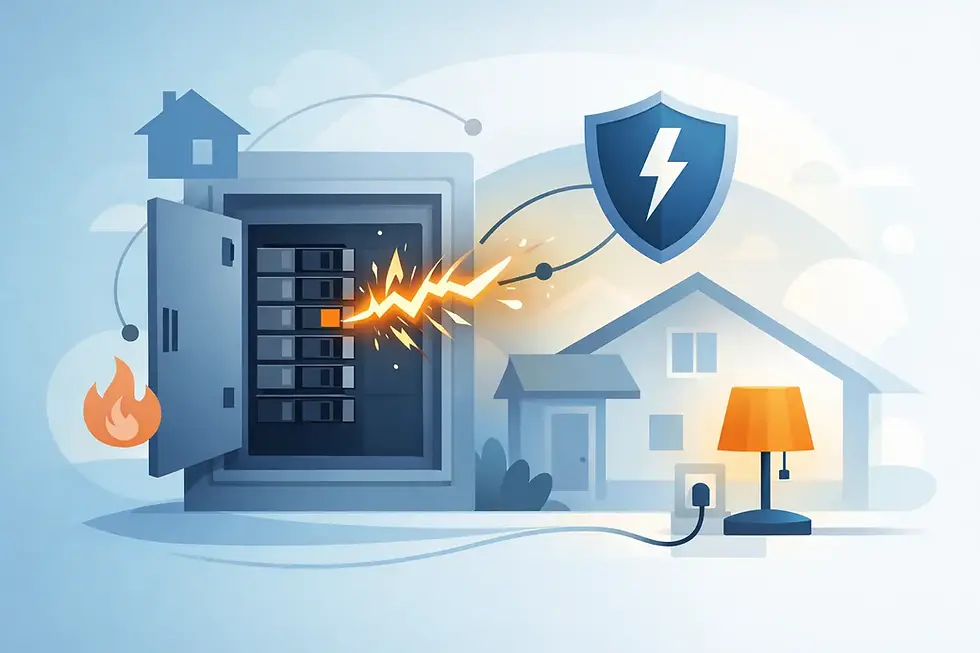
A tripped breaker is one of the most common reasons an outlet loses power. Walk to your electrical panel and look for a breaker that is positioned between ON and OFF, which often indicates it has tripped. Some breakers do not look obviously out of place, so inspect the labels and handle positions carefully.
To reset a breaker, move it firmly all the way to OFF first. Then move it back to ON. Return to the outlet and test it again with the working lamp or device.
If the breaker immediately trips again, or trips when you plug something into the outlet, leave it off. Repeated tripping is the breaker doing its safety job. It can point to an overloaded circuit, a damaged appliance, a short circuit, moisture, or a wiring issue that needs diagnosis.
Do not repeatedly reset a breaker in hopes that it will stay on. One reset is reasonable. Multiple resets can allow a serious issue to continue and may create a fire or shock hazard.
Check for GFCI Outlets Nearby
Many dead outlets are controlled by a GFCI outlet located somewhere else. GFCI protection is common in bathrooms, kitchens, garages, unfinished basements, laundry areas, exterior locations, and other spaces near moisture. In Omaha homes, a garage or basement GFCI may also protect nearby outlets that do not have TEST and RESET buttons of their own.
Look for outlets with two small buttons labeled TEST and RESET. Check the room where the dead outlet is located, then check nearby rooms and less obvious places such as the garage, basement, utility room, or exterior receptacles. Press RESET firmly on each GFCI you find.
If a GFCI will not reset, first unplug devices on that circuit and try again. A GFCI that continues to trip may be reacting to a ground fault, moisture, a failing device, or a wiring problem. That is a point where professional troubleshooting is the safer choice.
Use a Voltage Tester Carefully
A non-contact voltage tester is a simple tool that detects the presence of electrical voltage near a wire or receptacle. It can help identify whether power may be reaching the outlet, but it should not be treated as proof that a circuit is safe to touch. These testers can produce misleading readings in certain conditions, especially near energized wires or in crowded electrical boxes.
If you choose to use one, test the voltage tester on a known energized outlet first. Then hold it near the face of the dead outlet without inserting anything into the slots. If it detects voltage at an outlet that will not power a device, the issue could involve a loose neutral connection, a failed receptacle, or a wiring fault. If it does not detect voltage, power may be interrupted upstream.
A multimeter can provide more specific voltage readings, but using one requires a clear understanding of proper settings, probe placement, and electrical safety. It is not the best first tool for a homeowner who is unfamiliar with live electrical testing. Testing inside an outlet exposes you to energized components, and a mistake can cause shock, arcing, or damage to the meter.
Consider What Else Lost Power
The pattern of the outage often gives useful clues. Check lights, switches, and outlets in the same room and nearby rooms. A single dead outlet may mean the receptacle has failed. Several dead outlets can indicate that the first outlet in the circuit has a loose connection, often at a receptacle, switch, GFCI, junction box, or panel connection.
Outlets are commonly wired in sequence. That means one loose wire connection can interrupt power to receptacles downstream, even though the breaker remains on. This is particularly common with older backstab connections, where wires are pushed into holes on the back of a device rather than secured under side screws.
Do not remove outlet covers or pull receptacles out of the wall while the circuit is energized. Even after turning off a breaker, verify that power is off before any work is performed. If panel labels are unclear, the outlet shares a circuit with important equipment, or you are not fully certain which breaker controls it, it is better to stop and schedule service.
When a Dead Outlet Needs an Electrician
Some outlet problems are straightforward, but others are early warnings of a larger issue. Call a qualified residential electrician when you notice heat, discoloration, sparks, burning smells, a loose outlet, a breaker that will not stay on, or a GFCI that will not reset. The same applies if the outlet is in a damp location, serves an outdoor area, or affects a refrigerator, freezer, sump pump, medical equipment, or other essential load.
Older homes can have worn receptacles, overloaded circuits, aging wiring, ungrounded outlets, or previous repairs that were not completed correctly. A proper diagnosis traces the circuit, checks connections under safe conditions, tests the device, and determines whether the fix is a replacement receptacle, GFCI protection, circuit repair, or a larger electrical upgrade.
For homeowners, the practical goal is not to prove every possible fault. It is to identify whether a reset restores power safely and recognize when the issue needs hands-on electrical troubleshooting. Proton Electric helps Omaha-area homeowners diagnose dead outlets, replace damaged devices, and address the wiring problems that can sit behind a simple loss of power.
A dead outlet is worth checking promptly, even if you have another one nearby. Addressing the cause early can protect your home, prevent repeat outages, and make sure the next plug-in is one you can use with confidence.

Comments