
AFCI Breaker vs GFCI: What’s the Difference?
- Derek Curtis
- 3 days ago
- 6 min read
A breaker trips in the middle of dinner, or an outlet in the bathroom suddenly stops working, and the same question comes up fast: is this an AFCI issue or a GFCI issue? When homeowners compare AFCI breaker vs GFCI, they are usually trying to answer a practical question - what is this device protecting, and do I need to fix, replace, or upgrade it?
The short answer is simple. AFCI and GFCI protection are both safety features, but they protect against different hazards. One is mainly focused on dangerous arcing that can lead to electrical fires. The other is designed to reduce the risk of electric shock. That difference matters when you are troubleshooting a tripping breaker, planning a remodel, or updating an older electrical panel.
AFCI breaker vs GFCI: the basic difference
An AFCI breaker is short for arc-fault circuit interrupter. It monitors a circuit for arcing conditions that are not supposed to be there. Arcing can happen when wiring is damaged, a connection is loose, or a cord has started to break down. That kind of electrical fault can create heat and, in the right conditions, start a fire inside a wall, ceiling, or device box.
A GFCI is a ground-fault circuit interrupter. It looks for a different problem. If electricity starts flowing somewhere it should not, such as through water, a countertop, a metal appliance housing, or a person, the GFCI cuts power quickly. That is why GFCI protection is commonly associated with bathrooms, kitchens, garages, laundry areas, and outdoor locations.
So if you want the plain-language version, AFCI helps protect your home from fire risks tied to arcing, while GFCI helps protect people from shock hazards tied to ground faults.
What an AFCI breaker actually does
An AFCI breaker sits in the electrical panel and protects the branch circuit connected to it. Its job is not just to respond to overloads or short circuits like a standard breaker. It also looks for electrical patterns that suggest hazardous arcing.
This matters because not all dangerous wiring problems create the kind of surge a regular breaker can catch. A staple driven too tightly into a cable, a loose terminal, worn insulation, or a damaged lamp cord can create arcing without tripping a standard breaker right away. An AFCI is designed to recognize that abnormal behavior and shut the circuit down before it becomes a bigger problem.
For homeowners, AFCI protection is often discussed in bedrooms, living areas, hallways, and other general-use circuits inside the home. Code requirements have expanded over time, so newer homes and remodeled spaces are more likely to have AFCI protection than older homes.
That does not mean every trip is a sign of a major wiring defect. Sometimes an AFCI can trip because of a failing appliance, a damaged extension cord, or a nuisance issue tied to older electronics. The key point is that repeated AFCI trips should not be ignored. They deserve a proper diagnosis.
What a GFCI does in everyday use
A GFCI device reacts to a tiny imbalance between the outgoing and returning current on a circuit. If some of that electricity is leaking away, the device cuts power very quickly. That speed is what helps reduce the chance of serious shock.
In a typical home, GFCI protection is most common where water and electricity are more likely to meet. Bathrooms are the classic example, but kitchens, unfinished basements, garages, exterior outlets, crawl spaces, and laundry rooms can also require GFCI protection depending on the setup.
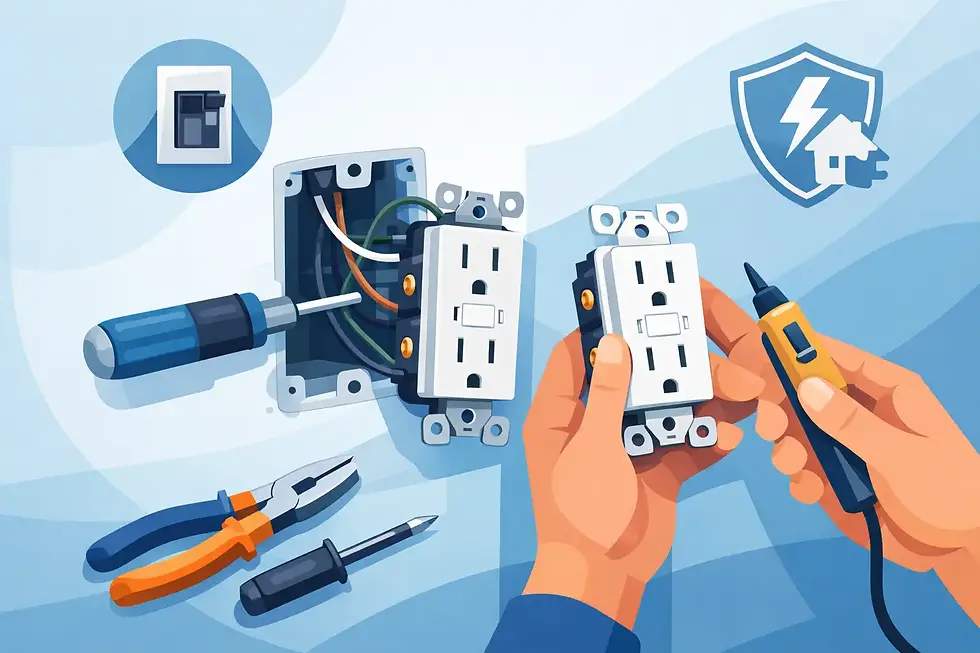
You may see GFCI protection in two common forms. One is a GFCI receptacle, which is the outlet with the test and reset buttons. The other is a GFCI breaker in the panel. Both can provide protection, but they are used a little differently depending on how the circuit is designed and what needs to be covered.
If a bathroom outlet stops working and there is a reset button nearby, a tripped GFCI may be the issue. If a garage freezer suddenly loses power, a tripped GFCI could also be part of the story. That is why understanding where GFCIs are installed can save a lot of frustration.
Where each one belongs
The easiest way to think about placement is this: AFCI protection is common on many indoor living-area circuits, while GFCI protection is common in areas where moisture, damp conditions, or contact with grounded surfaces increase shock risk.
That said, real homes are not always simple. A kitchen circuit may need GFCI protection because of countertop receptacles, while nearby circuits may also fall under AFCI rules. In some situations, one circuit can require both kinds of protection.
This is where homeowners get understandably confused. You may hear that a circuit is AFCI-protected, GFCI-protected, dual-function, or protected at the receptacle instead of the panel. All of those can be valid depending on the age of the home, the work being done, and the specific circuit involved.
Do you ever need both AFCI and GFCI?
Yes, sometimes you do.
Certain areas of the home can call for both types of protection because the hazards overlap. A circuit can have a fire risk from arcing and a shock risk from moisture or grounding conditions. In those cases, the solution may be a dual-function breaker or another approved method that provides both protections.
For homeowners, this usually comes up during remodels, panel upgrades, kitchen updates, basement finishing, or when replacing devices in a way that triggers current code requirements. It can also come up when an older home is being made safer one project at a time.
This is one reason electrical upgrades are not always as simple as swapping one breaker for another. The right answer depends on the circuit, the panel, and the location being served.
Common problems homeowners run into
The most common issue is nuisance tripping, or what seems like nuisance tripping. A breaker or outlet keeps cutting power, but nothing obvious looks wrong. In reality, the protection device may be doing exactly what it is supposed to do.
With AFCI devices, frequent trips can point to loose wiring, damaged cords, aging devices, or even a problem inside an appliance. With GFCI devices, trips may be caused by moisture, worn-out receptacles, a faulty appliance, or wiring issues that create leakage current.
Another common problem is misidentification. Homeowners sometimes call every protective device a GFCI because that term is more familiar. But if the tripping device is in the panel and labeled AFCI, the troubleshooting path is different.
There is also the issue of age. Older homes in Omaha may have circuits that predate many modern AFCI and GFCI requirements. That does not automatically mean the home is unsafe, but it can mean there is room for worthwhile safety improvements, especially during remodeling or panel replacement.
Which one is better?
Neither one is better in a general sense because they are not doing the same job.
If your concern is preventing shock near sinks, laundry equipment, garage spaces, or outdoor outlets, GFCI protection is the right tool. If your concern is reducing the risk of hidden electrical fires caused by arcing in branch wiring or cords, AFCI protection is the right tool. When a space presents both concerns, both may be needed.
That is the trade-off homeowners should understand. These devices can be more sensitive than older standard breakers and outlets, and that can feel inconvenient when trips happen. But that sensitivity is tied to the safety function you are paying for.
When to call an electrician
If a breaker or outlet trips once after an obvious event, like using a damaged hair dryer outdoors, the cause may be straightforward. If it keeps happening, or you are not sure whether the device is AFCI, GFCI, or both, it is time to have it checked.
An electrician can trace the circuit, identify whether the protection matches the location, test the device, and look for wiring problems that are not visible from the outside. That is especially important if you have an older panel, recent renovation work, flickering lights, warm outlets, or breakers that trip without a clear pattern.
For homeowners planning upgrades, this also helps avoid guesswork. Replacing a single outlet may seem simple, but if the circuit needs different protection at the panel or has compatibility issues, the safer move is to address the whole setup correctly.
When you think about AFCI breaker vs GFCI, the best question is not which one wins. It is whether your home has the right protection in the right places. A safer electrical system is not just about passing inspection - it is about knowing the outlets, breakers, and circuits you rely on every day are working the way they should.


Comments