
Electrical Troubleshooting for Homeowners
- Derek Curtis
- Apr 20
- 6 min read
A breaker that trips once during a storm may not mean much. A breaker that keeps tripping when you run the microwave, or lights that dim every time the AC kicks on, usually mean your home is asking for attention. That is where electrical troubleshooting matters. For homeowners, it is the process of identifying what is actually causing an electrical problem instead of guessing, replacing random parts, or hoping the issue goes away.
Good troubleshooting saves time, protects your home, and often prevents a small issue from turning into a larger repair. It also helps separate minor device problems from system-wide concerns like overloaded circuits, damaged wiring, or an aging panel. If you own a home in Omaha, especially an older one, that difference can matter a lot.
What electrical troubleshooting actually involves
Electrical troubleshooting is not just flipping breakers and seeing what happens. In a residential setting, it means tracing a symptom back to its source. A dead outlet may be caused by a tripped GFCI in another room. Flickering lights might come from a loose connection, a failing switch, a bad fixture, utility fluctuations, or a panel issue. The visible symptom is only the starting point.
A trained electrician looks at how the circuit behaves under normal use, what devices are connected, whether the issue is isolated or repeated, and whether there are signs of heat, wear, moisture, or improper installation. The goal is to find the root cause, not just restore power for the moment.
That distinction matters because electrical problems can imitate each other. For example, a homeowner might assume a breaker is bad because it keeps tripping. In reality, the breaker may be doing its job and responding to an overloaded circuit or a short. Replacing the breaker without finding the actual problem does not solve much.
Common signs your home needs electrical troubleshooting
Some electrical issues are obvious, like a room that suddenly loses power. Others show up gradually and are easier to brush off. Homeowners should pay attention when outlets stop working, switches feel warm, lights flicker, breakers trip repeatedly, or there is a buzzing sound from a panel, switch, or receptacle.
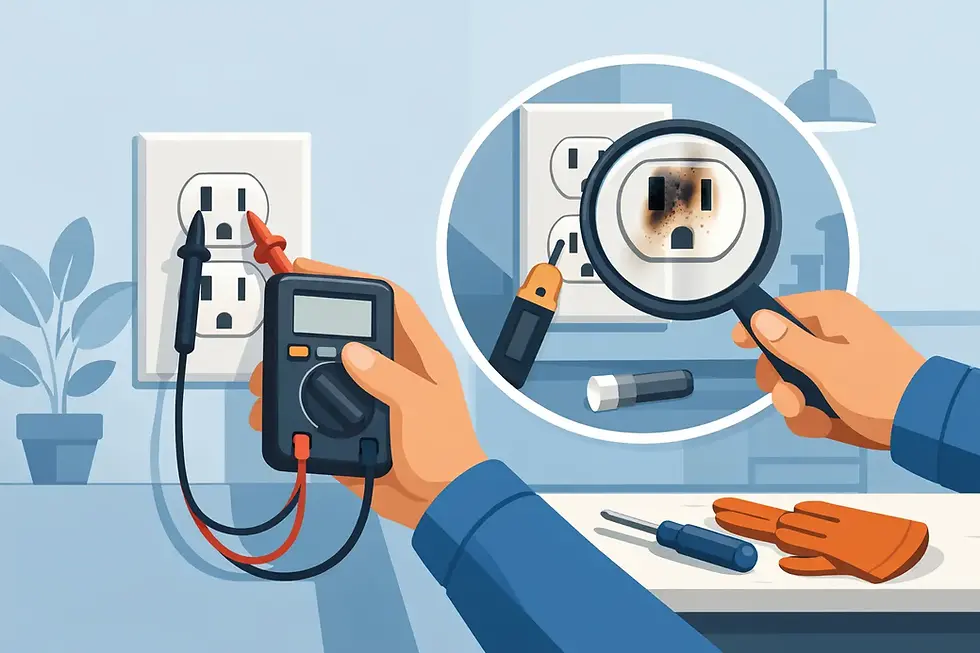
You may also notice burning smells, discolored outlet covers, or devices that only work if a plug is jiggled into place. Those are not normal quirks of homeownership. They are signs that a connection may be loose, damaged, or unsafe.
In older homes, troubleshooting is often needed because the electrical system was not designed for modern demand. Kitchen appliances, home offices, entertainment systems, EV chargers, and newer HVAC equipment place a much heavier load on a system than homes built decades ago were expected to handle.
Why guessing can make the problem worse
Homeowners are practical, and many people naturally start with the simplest fix. Reset the breaker. Replace the bulb. Swap the outlet. Sometimes that works. But when it does not, guesswork can lead to wasted money and missed warning signs.
A recurring outage at one outlet might look like a bad receptacle, but the real issue could be a loose connection upstream in the circuit. Replacing the outlet might make you feel productive while the actual fault continues heating inside the wall. The same is true with flickering lights. If the fixture is replaced and the flicker remains, the issue may be elsewhere in the circuit or in the service equipment.
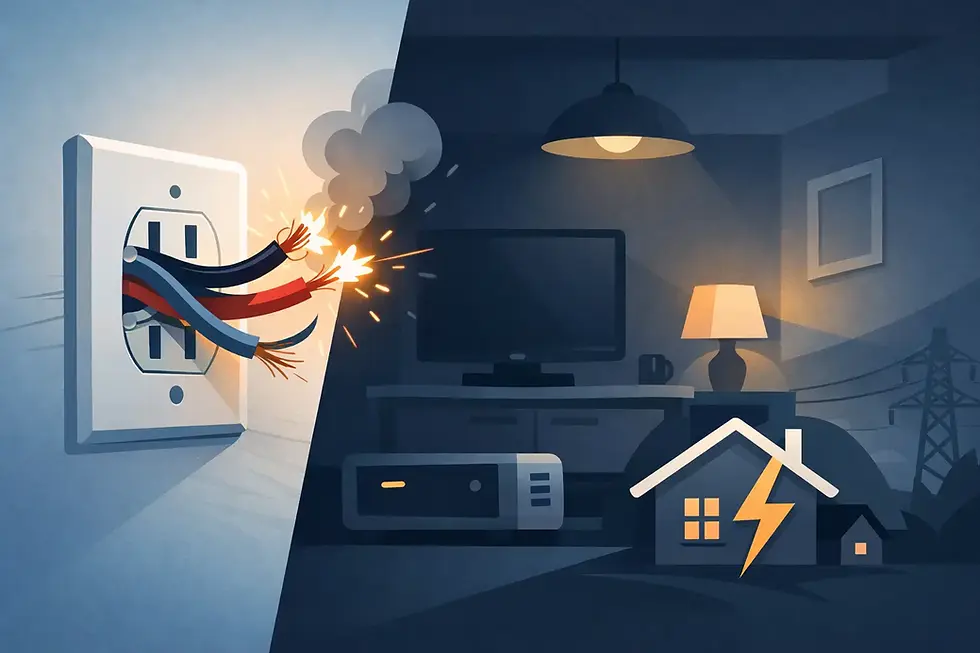
There is also a safety side to this. Electrical faults can involve arcing, overheating, and insulation damage long before a full failure happens. A symptom that seems minor today can become a fire hazard if it is ignored.
Basic checks homeowners can safely make
There are a few simple steps that make sense before calling for service, as long as you stay within safe limits. Check whether a breaker has tripped and fully reset it once. Look for a GFCI outlet in a bathroom, garage, kitchen, basement, or exterior location, because one tripped device can shut off several outlets downstream. Confirm whether the problem is limited to one device by plugging in something you know works.
You can also pay attention to patterns. Does the issue happen only when certain appliances run? Is one room affected, or half the house? Did the problem start after a storm, renovation, or new appliance installation? Those details help narrow the cause quickly.
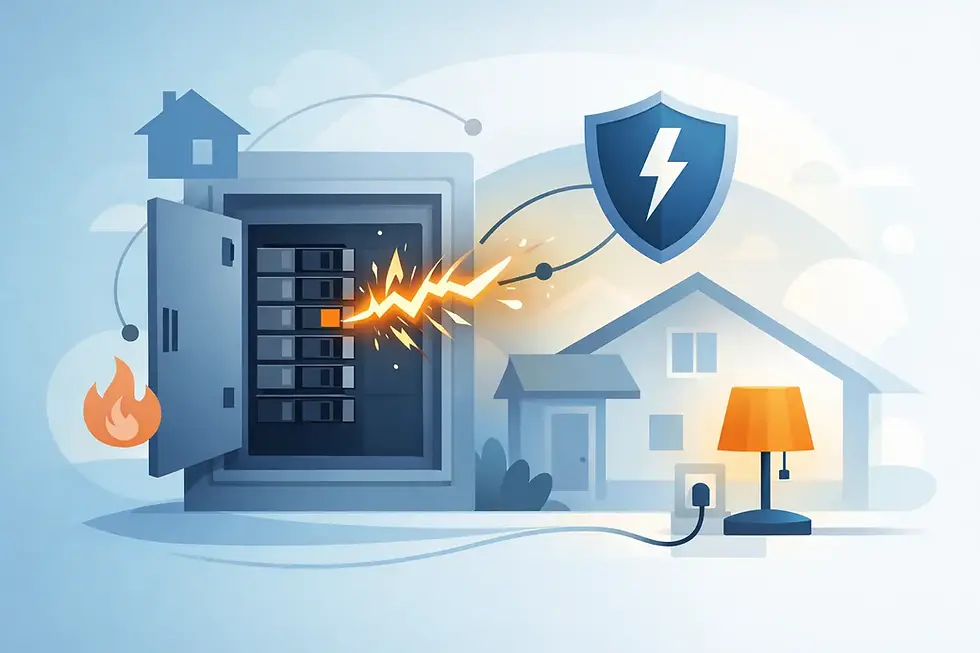
What you should not do is remove panel covers, open devices while they are energized, or continue resetting a breaker that repeatedly trips. If a breaker will not stay on, that is a sign to stop and have the circuit evaluated properly.
Electrical troubleshooting in older Omaha homes
Omaha has plenty of established neighborhoods with homes that have served families well for generations. That charm often comes with older wiring methods, outdated panels, limited circuits, or additions that changed the original electrical layout. In those homes, troubleshooting can reveal not just a single bad device, but a system that needs thoughtful updates.
Sometimes the problem is simple, like a worn switch or a failed GFCI. Other times, the issue points to undersized service, crowded breakers, or circuits that have been extended too many times over the years. It depends on the age of the home, the quality of previous work, and how much the electrical demand has changed.
That is why context matters. The right repair in one house may be the wrong repair in another. A quick fix is not always the best value if the underlying system is already stretched beyond what it was built to handle.
When electrical troubleshooting leads to upgrades
Not every service call ends with a repair. Sometimes troubleshooting shows that an upgrade is the safer and more practical option. If a panel is outdated, breakers no longer fit the load, or circuits are overloaded regularly, upgrading the panel or adding dedicated circuits may solve the problem more effectively than repeated spot repairs.
The same applies to lighting and device replacement. If switches are worn out, outlets are loose, or rooms do not have modern protection where needed, an electrician may recommend replacing devices while addressing the original issue. That is not upselling for the sake of it. In many cases, it is a way to improve safety and everyday convenience at the same time.
This is where homeowners benefit from clear recommendations. A good diagnosis should explain what failed, why it failed, and whether a repair is likely to last. It should also explain when an upgrade makes more sense financially than continuing to patch older equipment.
What a professional looks for during electrical troubleshooting
Professional troubleshooting is built around testing, inspection, and experience. An electrician may check voltage, continuity, load behavior, wiring terminations, breaker performance, fixture condition, and signs of heat or corrosion. If the problem is intermittent, the visit may focus on recreating the conditions that trigger it.
That matters because some of the most frustrating electrical problems are not constant. A circuit may work fine in the morning and fail in the evening when more appliances are running. Lights may flicker only when outdoor humidity is high. A bathroom outlet may trip only after a hair dryer and heater are used together. The details help pinpoint whether the issue is overload, moisture, a failing device, or something more involved.
A homeowner should expect plain-language answers. You should know whether the problem is isolated, whether it affects safety, and what options you have for fixing it.
When to call right away
Some symptoms should move to the front of the list. Call promptly if you smell burning, hear buzzing in a panel or outlet, see scorch marks, feel heat from a switch or receptacle, lose power to part of the home without an obvious cause, or notice repeated breaker trips. The same goes for any issue following storm damage or water exposure.
These are not wait-and-see situations. Even if the power comes back, the underlying fault may still be present.
For homeowners who want a reliable answer instead of trial and error, professional electrical troubleshooting is often the fastest path forward. A focused diagnosis can prevent repeat problems, reduce safety risks, and help you make smart decisions about repairs or upgrades. If your home has been sending signals that something is off, it is worth listening now rather than after a small problem turns into a major one.
Comments