
How to Repair Electrical Outlet Safely
- Derek Curtis
- Apr 24
- 6 min read
A dead outlet usually gets your attention at the worst possible time - when the coffee maker will not start, the vacuum quits mid-room, or a charger suddenly stops working. If you are searching for how to repair electrical outlet issues, the first thing to know is that some outlet problems are simple, while others point to a larger wiring or safety concern behind the wall.
For homeowners, that difference matters. A loose receptacle cover or a tripped GFCI may be a straightforward fix. A warm outlet, burnt smell, flickering power, or repeated breaker trips is a different category entirely. Those symptoms can signal failing connections, damaged wiring, or overload conditions that should be handled carefully.
When an outlet problem is more than an inconvenience
An electrical outlet is one of the most used devices in your home, but it is easy to ignore until it stops working. Over time, normal wear can loosen internal contacts. Older homes may also have outlets that are outdated, improperly grounded, or connected to aging wiring that was never designed for modern appliance loads.
That is why outlet repair is not just about getting power back. It is also about making sure the device is safe to use every day. In homes around Omaha, especially older properties, outlet trouble can sometimes be the first visible sign of a larger electrical issue.
How to repair electrical outlet problems starts with diagnosis
Before anyone touches the outlet itself, the safest first step is to narrow down the type of failure. Not every dead receptacle is actually broken.
Start by checking whether the breaker has tripped. Reset it once if needed. If it trips again right away, stop there. A breaker that will not hold usually means a fault that needs professional troubleshooting.
Next, check for a nearby GFCI outlet. Kitchens, bathrooms, garages, basements, laundry areas, and exterior circuits often have standard outlets downstream from one GFCI device. If that GFCI has tripped, several outlets may appear dead at once. Press reset and test the outlet again.
If the outlet is controlled by a wall switch, make sure the switch is on. This sounds obvious, but switched receptacles are common in living rooms and bedrooms, especially in homes where lamps are intended to provide the main light.
If power is still out, pay attention to what the outlet is doing. A completely dead outlet is one thing. An outlet that works only when a cord is held at an angle, sparks when plugging in, feels loose, or shows discoloration tells a different story. Those details help determine whether the issue is the device itself, the wiring connection, or the circuit beyond it.
The outlet issues homeowners can sometimes identify
There are a few common outlet failures that show up again and again in residential service calls. One is a worn receptacle. After years of use, the contacts inside the outlet can lose tension, which means plugs no longer fit snugly. That is not just annoying. A loose connection can create heat.
Another common issue is a failed backstab connection. In some homes, wires were pushed into the back of the outlet rather than secured under terminal screws. Those push-in connections can loosen over time and cause intermittent power or complete failure.
You may also be dealing with a tripped or failed GFCI outlet. These devices are designed to shut off power quickly when they detect a fault. Sometimes they are doing exactly what they should. Other times, the GFCI itself wears out and needs replacement.
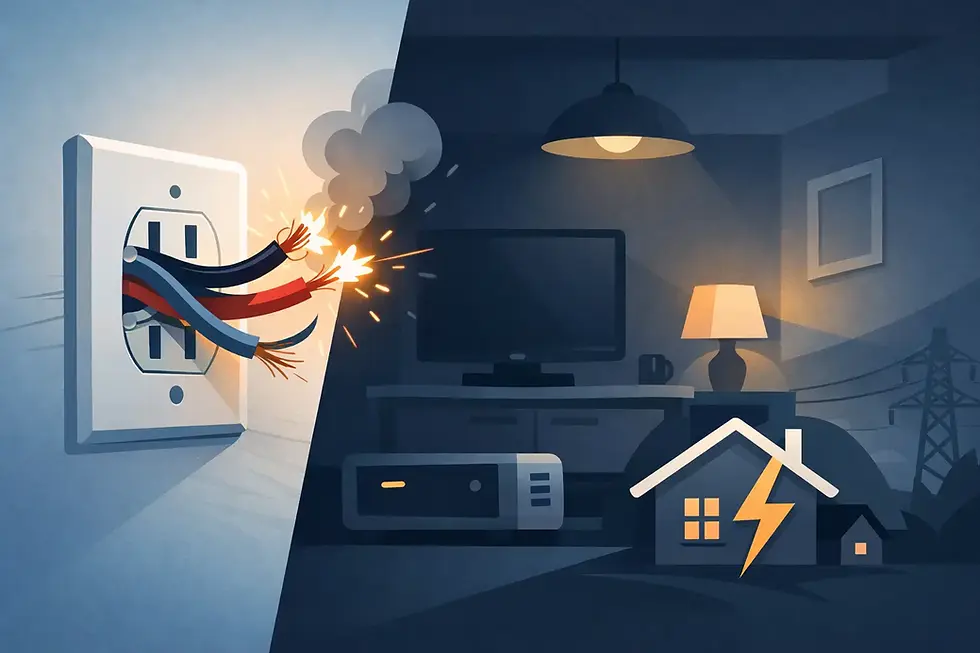
Then there are signs that should never be treated as minor. Black marks, melted plastic, buzzing, heat, or a burning odor suggest arcing or overheating. At that point, the goal is not figuring out a quick fix. It is preventing damage and protecting your home.
Safe steps before any outlet repair
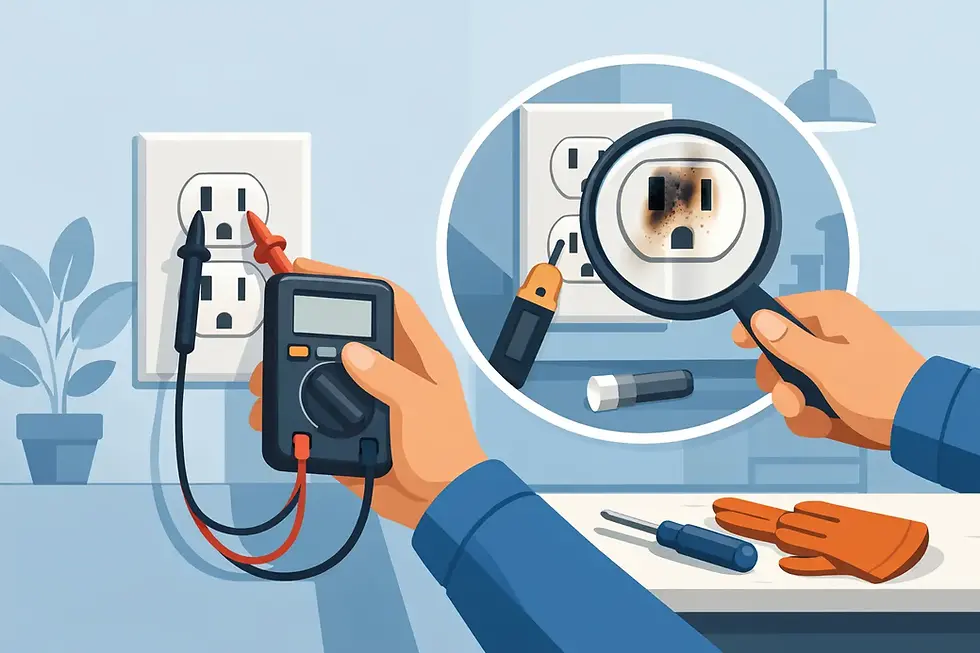
If you plan to inspect an outlet more closely, turn off the correct breaker first and confirm the outlet is de-energized with an appropriate tester. Never assume an outlet is off just because a lamp plugged into it does not turn on. Wiring conditions can be misleading, especially on partially failed circuits.
Remove the cover plate and look for obvious warning signs such as cracked plastic, scorched areas, or loose mounting. If the outlet body is damaged, replacement is generally the right move rather than trying to salvage it.
If the wiring is visible and you see loose conductors, signs of heat, or mixed wire conditions that do not make sense, it is smart to stop and call a licensed electrician. A basic receptacle swap is one thing. Untangling questionable wiring in a wall box is another.
Repair or replace? It depends on the outlet condition
In practical terms, many outlet repairs end up being replacements. Standard duplex outlets are relatively inexpensive, and when a device is worn, cracked, discolored, or no longer gripping plugs securely, replacing it is often the safer and longer-lasting solution.
That said, the outlet itself is not always the real problem. If the device looks fine but has lost power because of a failed upstream connection, replacing the receptacle alone will not solve anything. The same goes for circuits with hidden damage, overloaded wiring, or a failing breaker.
This is where experience matters. The visible symptom is not always the source of the problem. A dead outlet in one bedroom may actually trace back to a loose connection in another box on the same circuit.
How to repair electrical outlet issues without creating new risks
The biggest mistake homeowners make is treating outlet repair like a cosmetic task. The cover plate is cosmetic. The wiring behind it is not. If conductors are landed on the wrong terminals, if wire connections are loose, or if the box is overcrowded, the repair can make the situation less safe than before.
Polarity and grounding matter. So does matching the correct type of outlet to the location. Bathrooms, kitchens, garages, and outdoor areas often require GFCI protection. In some parts of the home, AFCI protection may also be part of the circuit design. If the home has older wiring or a recently updated panel, code and compatibility questions can come into play.
That is why the answer to how to repair electrical outlet problems is sometimes not a step-by-step DIY fix. Sometimes the right answer is identifying when the issue has moved beyond a simple device replacement.
Signs it is time to call a licensed electrician
Some outlet problems should go straight to a professional. If the outlet is warm, sparking, buzzing, burnt, or causing breaker trips, do not keep testing it. If multiple outlets are out, there may be a failed connection somewhere else on the circuit. If aluminum wiring, old ungrounded wiring, or a damaged electrical box is involved, the repair needs a more careful approach.
It also makes sense to call when you are already thinking about an upgrade. If one outlet has failed because it is old and worn, the others nearby may not be far behind. Replacing outlets in key rooms, adding tamper-resistant receptacles, upgrading to GFCI protection, or correcting grounding issues can improve both safety and everyday convenience.
For homeowners in Omaha, that can be especially worthwhile in older homes where electrical systems have been modified over the years. A clean, properly diagnosed repair saves time and helps avoid repeat problems.
Outlet repair is also a good time to improve the room
A service visit for an outlet problem can solve more than one issue at once. If you are already opening the wall box or evaluating the circuit, it may be a smart time to consider whether the room has enough outlets, whether the switch and devices match, or whether lighting upgrades would make the space work better.
That home improvement angle often gets overlooked. Electrical repairs are not only about fixing what failed. They are also a chance to make daily use of the space easier and safer. Proton Electric works with homeowners who need both practical repairs and sensible upgrades, which is often the right combination in an actively used home.
A smart repair protects more than one outlet
When an outlet stops working, the goal is not just restoring power to one spot on the wall. It is making sure the circuit is safe, the diagnosis is accurate, and the same problem is not waiting to show up in the next room a week later.
If your outlet issue is minor, the fix may be simple. If there are signs of heat, damage, repeated tripping, or uncertain wiring, it is worth slowing down and getting it handled the right way. A good repair should leave you with more confidence every time you plug something in.
Comments