
How to Troubleshoot Electrical Circuits
- Derek Curtis
- Apr 22
- 5 min read
A light starts flickering every time the microwave runs, or one outlet in the living room suddenly stops working while everything around it seems fine. That is usually when homeowners start searching for how to troubleshoot electrical circuits. The good news is that some issues have simple explanations. The bad news is that electrical problems can also point to hidden damage, overloaded wiring, or failing devices that should not be ignored.
For homeowners, the goal is not to become an electrician overnight. It is to identify what is happening, rule out the obvious, and know when the problem is safe to investigate further and when it needs professional repair. A careful approach protects your home, your devices, and your family.
How to troubleshoot electrical circuits safely
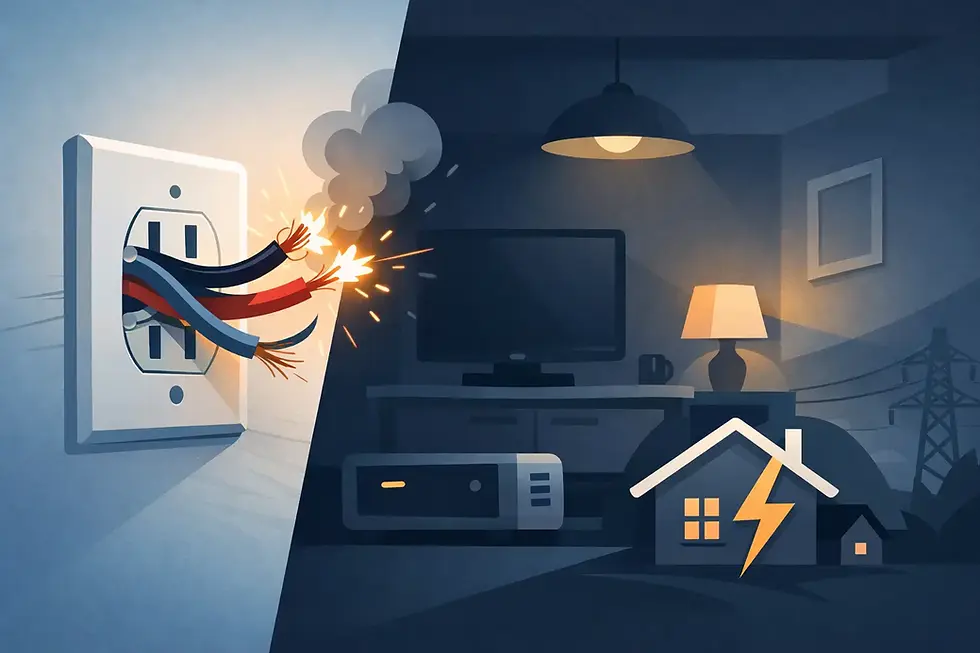
Before you test anything, start with safety. If you smell burning, see scorch marks, hear buzzing inside walls, or notice a panel that feels hot, stop there. Those are not watch-and-wait problems. Shut off power to the affected area if you can do so safely, and call a licensed electrician.
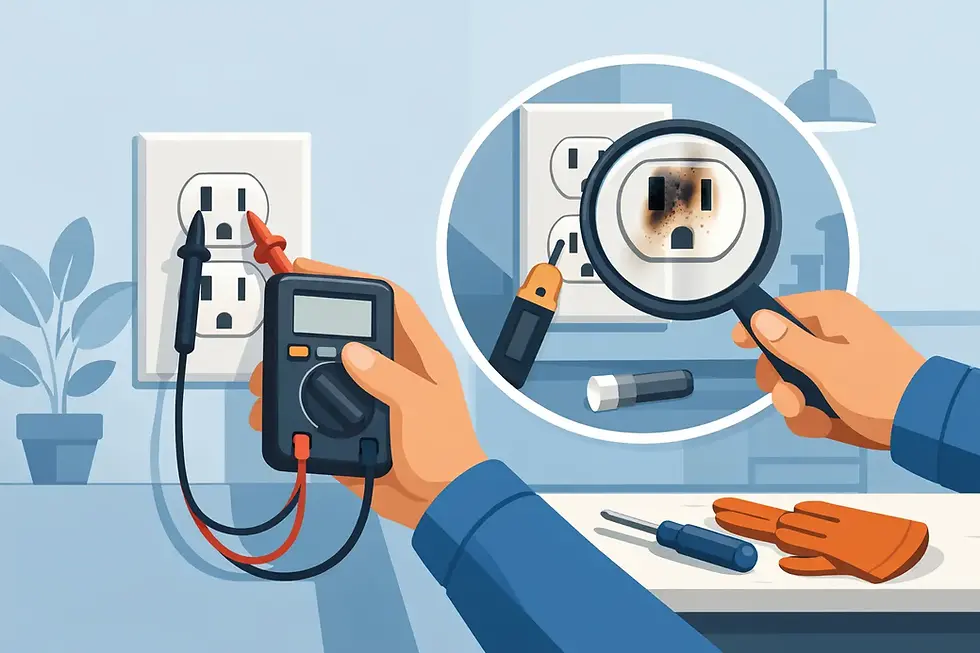
For less urgent issues, begin by turning off the circuit before removing any cover plates or looking at a device more closely. Use a non-contact voltage tester to confirm the power is actually off. Do not trust a label in the panel without checking. In many homes, panel directories are incomplete or outdated.
It also helps to narrow the problem before touching anything. Ask a few basic questions. Is only one outlet affected, or has half a room lost power? Did the problem start after plugging in a space heater, vacuum, air fryer, or holiday lights? Is the issue constant, or does it happen only when another appliance turns on? Those details often point toward overloads, loose connections, or a tripped protective device.
Start with the simplest checks first
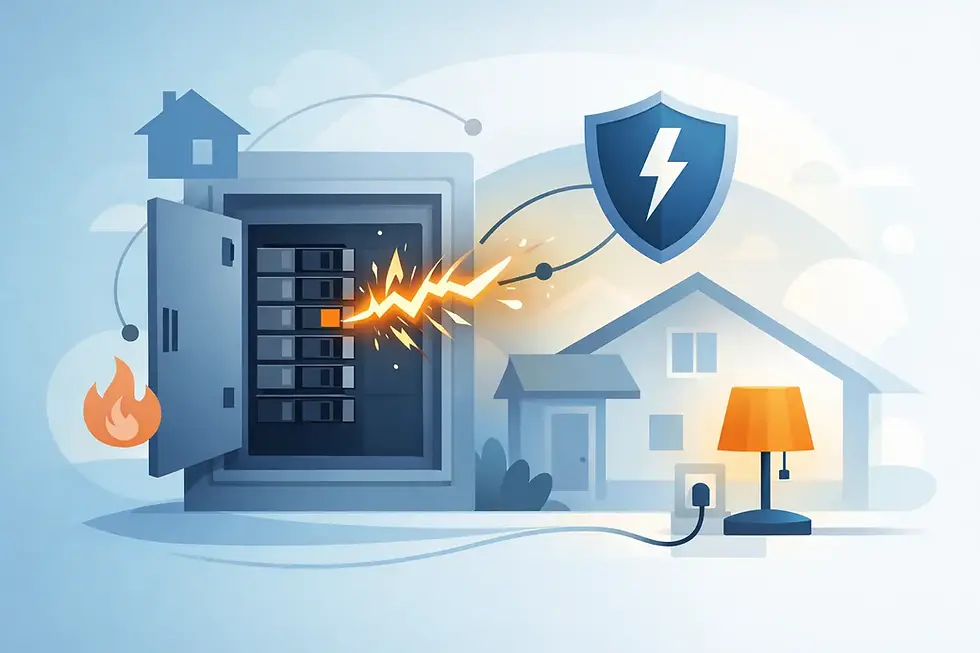
The first stop is usually the electrical panel. Look for a breaker that is fully off or sitting in the middle position. Reset it by switching it firmly all the way off, then back on. If it trips again right away, do not keep resetting it. A breaker that will not stay on is telling you there is a fault somewhere on that circuit.
Next, check for a GFCI outlet. In many homes, one GFCI can protect multiple standard outlets downstream. That means a bathroom, garage, basement, kitchen, laundry area, exterior outlet, or even a nearby room may have tripped and shut off power elsewhere. Press the reset button and see whether the dead outlet or device comes back on.
Then look at the device itself. If a lamp, charger, or appliance is not working, plug it into a known working outlet before assuming the circuit is the problem. Homeowners sometimes chase a wiring issue when the real cause is a failed power strip, damaged cord, or bad appliance.
Common circuit problems and what they usually mean
A dead outlet can have a few causes. The most common are a tripped breaker, a tripped GFCI, a loose connection, or a failed receptacle. If only one outlet is out and nearby outlets still work, that often points to the device itself or a loose connection at that location or upstream.
Flickering lights are a little more nuanced. One flickering bulb may just be a loose lamp or a bad LED bulb. Flickering across multiple fixtures, especially when larger appliances start up, can suggest a circuit under strain, a poor connection, or service-related issues. If lights dim noticeably when equipment turns on, it is worth having the load and circuit condition evaluated.
A breaker that trips once after too many devices are used at the same time may be doing exactly what it is supposed to do. A breaker that trips repeatedly without a clear overload is different. That can point to a short circuit, ground fault, damaged wiring, or a failing breaker. The trade-off here is simple: one occasional trip may be manageable, repeated trips are a repair issue.
Warm outlets or switches should also get attention. Slight warmth from a dimmer switch can be normal, but warmth combined with discoloration, buzzing, or a burning smell is not. That usually means resistance, loose wiring, or device failure.
How to troubleshoot electrical circuits room by room
When the problem is not obvious, think in zones. Start at the panel, then work toward the affected room. If a bedroom has no power on one wall, test each outlet and switch nearby. If only half the room is affected, you may be dealing with one branch of the circuit or a failed connection at the last working device before the dead section.
Kitchen and bathroom circuits need extra caution because GFCI protection is common and the electrical load is often higher. If countertop outlets stop working, check every GFCI in the area, even one that seems unrelated. In garages and exterior circuits, moisture can also play a role, especially after storms or seasonal weather changes.
Living rooms and bedrooms often reveal problems through convenience upgrades. A homeowner adds a space heater, entertainment center, treadmill, or window AC unit, and suddenly the circuit starts acting up. That does not always mean anything is defective. Sometimes the circuit is simply carrying more than it was designed to handle conveniently.
Basic tools that help without overcomplicating things
A few tools can make troubleshooting more accurate. A non-contact voltage tester is useful for confirming whether power is present before and after shutting off a breaker. A plug-in outlet tester can help identify common receptacle issues such as reversed polarity or an open ground, though it does not catch every wiring problem. A flashlight and a phone camera are also practical for inspecting dark panel labels, outlets, and visible signs of damage.
What most homeowners do not need is a guess-and-check approach with exposed wiring. If testing requires removing devices, checking wire terminations, or opening the panel beyond resetting a breaker, that is usually where DIY should stop. There is a difference between diagnosing symptoms and performing electrical repair.
Signs the issue is bigger than one circuit
Sometimes a homeowner starts with one dead outlet and discovers the problem is broader. If multiple circuits are acting strangely, lights are unusually bright in one area and dim in another, or large appliances are behaving unpredictably, the issue may involve the panel, service connections, or the utility side of power delivery.
Older homes can add another layer. Aging panels, worn receptacles, aluminum wiring connections, or outdated devices can create recurring symptoms that look random at first. In those cases, troubleshooting is not just about restoring power. It is about deciding whether repair, replacement, or a targeted upgrade makes more sense long term.
That is where experience matters. A quick fix may restore function today, but if the root cause is a weak connection or overloaded branch circuit, the same problem often returns.
When to stop troubleshooting and call an electrician
There is a practical line between homeowner checks and professional diagnosis. If you have reset the breaker, checked nearby GFCIs, ruled out a bad appliance, and the circuit still does not work, the next step should be professional service. The same goes for any breaker that trips repeatedly, any outlet that shows burn marks, and any wiring that appears loose or damaged.
It also makes sense to call sooner if your home has an older panel, if you are planning a remodel, or if the problem involves outdoor lighting, bathroom circuits, or kitchen loads. Those areas have higher usage and stricter safety requirements. A licensed electrician can test the circuit properly, find the failed connection or overload point, and recommend whether repair or upgrade is the better value.
For Omaha homeowners, electrical troubleshooting is not just about convenience. It is about catching small warning signs before they become larger safety issues. Proton Electric works with homeowners who need clear answers, practical repairs, and straightforward service when a circuit is not doing what it should.
A circuit problem rarely improves by being ignored. If something feels off, trust that instinct, check the safe basics, and get qualified help before a minor issue becomes a bigger repair.
Comments