
How to Know Panel Capacity at Home
- Derek Curtis
- Jun 23
- 6 min read
If your lights dim when the microwave starts, or you're planning to add a hot tub, EV charger, or new appliances, one question comes up fast: how to know panel capacity. For homeowners, this is not just a technical detail. It affects safety, daily convenience, and whether your home can handle the upgrades you want.
The good news is that you can get a basic idea of your panel's capacity by looking at a few key details. The more important news is that panel capacity is only part of the story. A panel might say 200 amps and still have issues related to age, condition, wiring, or available space for new circuits.
How to know panel capacity from the main breaker
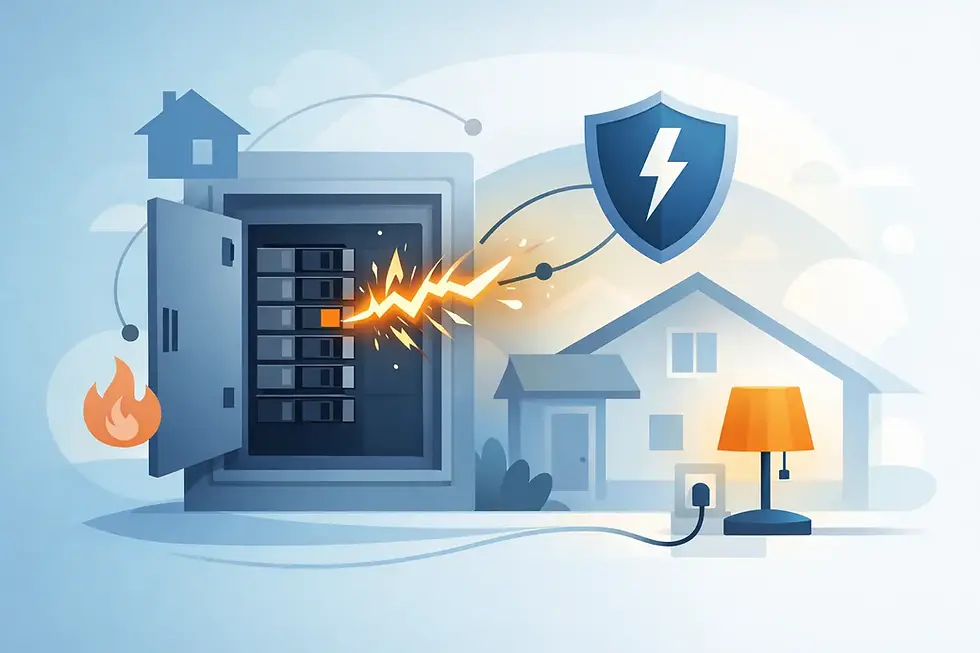
The quickest place to start is the main breaker inside your electrical panel. In many homes, the main breaker is a larger switch at the top or bottom of the panel, and it usually has a number printed on it. That number is often 100, 125, 150, or 200. In most cases, that number reflects the panel's service capacity in amps.
If the main breaker says 200, your home likely has 200-amp service. If it says 100, you likely have 100-amp service. That gives you a useful starting point, especially if you are trying to understand whether your electrical system is on the smaller or larger side for a modern home.
Still, there are exceptions. Some older homes have had partial upgrades over the years. A panel may have been changed, but other parts of the system may not match. In some cases, labeling can be missing, worn off, or misleading. That is why a visual check is helpful, but not always the last word.
What panel capacity actually means
Panel capacity refers to the amount of electrical current your service panel is designed to handle safely. In simple terms, it is the size of the electrical "front door" feeding power into your home.
That does not mean you should aim to use every amp available all the time. Your home has many circuits sharing that service, and real electrical demand changes throughout the day. Air conditioning, electric dryers, ovens, water heaters, sump pumps, and EV chargers can all place heavy demand on the panel, especially when several are running at once.
This is where homeowners sometimes get tripped up. They assume that if there are empty breaker spaces, they have plenty of capacity left. Empty spaces help, but they do not automatically mean your service can support more load. A panel can have room for more breakers and still be too small for a major addition.
Other ways to tell what size panel you have
Beyond the main breaker, the panel label may provide more information. Many panels have a manufacturer label inside the door that lists the panel rating, model number, and other specifications. If the label is legible, it can confirm the panel's maximum rating.
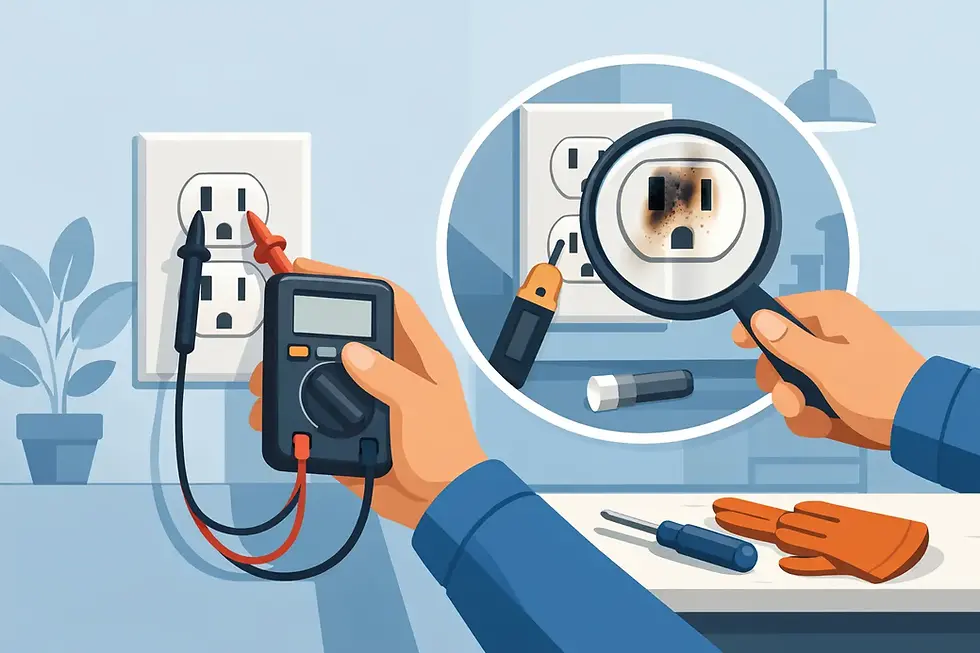
You can also look at your electric meter base and service entrance equipment, but this gets more technical quickly. For most homeowners, a better approach is to gather the visible information and have a licensed electrician confirm it. That is especially true if your home is older or if you are seeing warning signs like tripped breakers, buzzing, heat, or corrosion.
Age matters too. A 60-amp or 100-amp service may have been common decades ago, but many homes today need more capacity because of larger HVAC systems, updated kitchens, home offices, and modern appliances. Even if the existing service is technically working, it may not be the best fit for how your household uses power now.
How to know panel capacity before adding new equipment
If you are planning a home improvement project, knowing your panel capacity matters before the work starts, not after the breaker trips. Common upgrades that can push a panel harder include EV chargers, hot tubs, finished basements, kitchen remodels, electric ranges, and new HVAC equipment.
At that point, checking the main breaker is only the first step. The more accurate method is a load calculation. This is a formal way to estimate how much electrical demand your home already has and how much more it can safely support. It takes into account square footage, major appliances, heating and cooling loads, and other factors.
This is where the answer becomes, it depends. Two homes with 200-amp panels may not have the same available capacity. One may already be close to its practical limit because of all-electric appliances and added equipment. The other may have far less demand and plenty of room for expansion.
Signs your panel may be undersized
You do not need to wait for a full failure to suspect a capacity issue. If your breakers trip regularly, lights flicker when larger appliances turn on, or you rely heavily on power strips and extension cords, your system may be under strain.
There are also more serious warning signs. A warm panel, a burning smell, crackling sounds, rust, or breakers that will not reset properly should be treated as service concerns, not annoyances. Those issues can point to problems beyond panel size, including loose connections, failing breakers, or damaged components.
Older panels can present another issue. Some outdated panel brands and aging equipment are known for safety concerns or unreliable breaker performance. In those cases, the question is not just how to know panel capacity. It is whether the panel is still safe and dependable enough for your home.
Why panel size is not the same as usable room
Homeowners often ask whether they need a larger panel because there are no open breaker slots left. Sometimes the answer is yes, but not always. A panel can run out of physical space before it runs out of electrical capacity. In some situations, there may be approved ways to reorganize circuits or use compatible breaker configurations.
On the other hand, a panel can have open spaces but still need an upgrade because the service size is too small for what you want to add. Physical room and electrical capacity are related, but they are not identical.
That distinction matters when you are comparing options. If your goal is to add one circuit, the solution might be simple. If your goal is to modernize the home for long-term use, including future upgrades, a full panel replacement may make more sense.
When a panel upgrade is worth it
A panel upgrade is usually worth considering when your home has an older 60-amp or 100-amp service, when you are adding major electrical equipment, or when the existing panel shows signs of age or failure. It can also make sense when you want better reliability and more flexibility for future projects.
For many Omaha homeowners, this comes up during remodeling or after buying an older home. The electrical system may have kept up well enough for years, but newer usage patterns can expose its limits. More devices, more appliances, and more demand mean the panel has to do more than it did when the house was built.
A properly sized and professionally installed panel can improve safety, reduce nuisance breaker trips, and make it easier to add circuits for lighting, devices, and equipment later. It is one of those upgrades that supports everything else in the home, even though it stays mostly out of sight.
What an electrician checks besides amperage
When a licensed electrician evaluates your panel, they do more than read the number on the main breaker. They look at the panel condition, wire sizing, grounding and bonding, breaker compatibility, signs of overheating, available spaces, and the overall load on the system.
That broader view is what makes the evaluation useful. A panel may be the right size on paper but still need attention because of wear, poor workmanship, double-tapped breakers, corrosion, or outdated components. Or it may be smaller than ideal, yet still safe for the moment if your load is modest and no major additions are planned.
This is why panel questions are rarely just about one number. The safest answer usually comes from looking at the whole system instead of one label.
A practical next step for homeowners
If you want to know your panel capacity, start by checking the main breaker and the panel label. Take note of the amp rating, the panel brand, and whether there are visible warning signs like rust, heat, or frequent tripping. That gives you a solid starting point.
If you are planning an upgrade, buying an older home, or dealing with recurring electrical issues, the next step should be a professional evaluation. A local residential electrician can confirm the service size, assess the panel's condition, and tell you whether your current setup is adequate or nearing its limit. For homeowners in the Omaha area, Proton Electric helps with exactly that kind of practical, safety-focused guidance.
A panel does not need to be flashy to matter. When it is the right size and in good condition, your whole home works better and future improvements become a lot easier.
Comments