
Troubleshooting Dead Light Fixtures at Home
- Derek Curtis
- Jul 1
- 6 min read
A light fixture that suddenly stops working usually feels like a small problem until the quick fixes fail. You change the bulb, flip the switch a few times, and still get nothing. For homeowners, troubleshooting dead light fixtures is often a matter of separating a simple part failure from a wiring issue that needs professional attention.
Start with the most likely cause
The first step is to slow down and rule out the obvious. A dead fixture does not always mean the fixture itself has failed. In many homes, the problem is a bad bulb, a tripped breaker, a loose switch connection, or a GFCI outlet elsewhere on the same circuit.
Try a new bulb first, even if the current one looks fine. Some bulbs fail without visible damage, and LED lamps can quit in ways that are not obvious. If the fixture takes multiple bulbs, replace each one with a known working bulb before assuming the fixture is the issue.
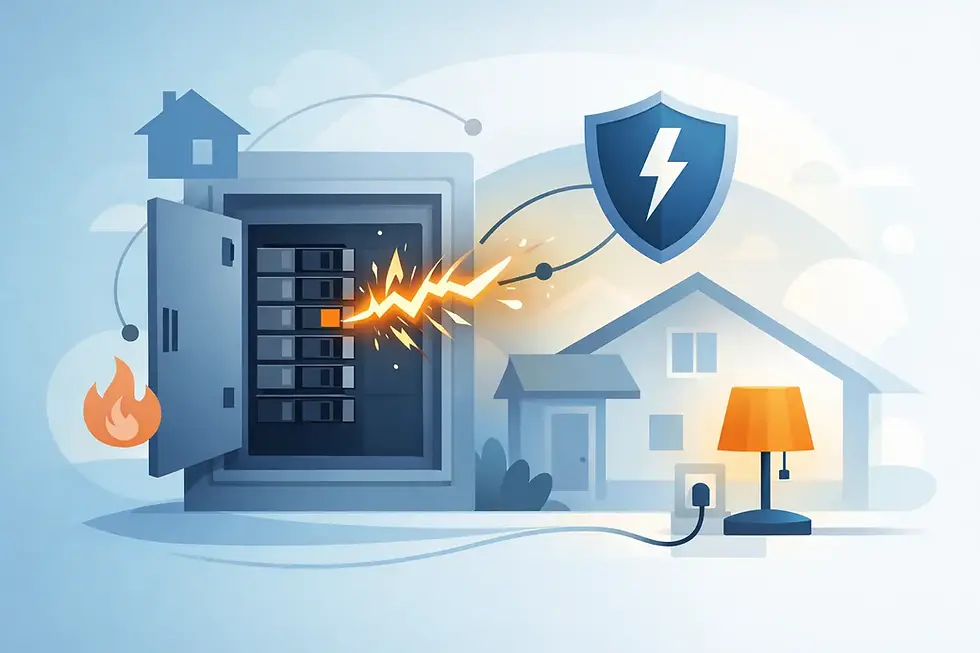
Then check the breaker panel. A breaker does not always look fully tripped, so it helps to switch the suspected breaker firmly off and then back on. If the breaker trips again right away, stop there. Repeated tripping points to a deeper electrical problem, not a bad light bulb.
Troubleshooting dead light fixtures safely
Any time a fixture, switch, or junction box may need to be opened, safety comes first. Turn off power at the breaker, not just at the wall switch. A switch only interrupts one part of the circuit, and wiring in the box may still be energized depending on how the circuit was installed.
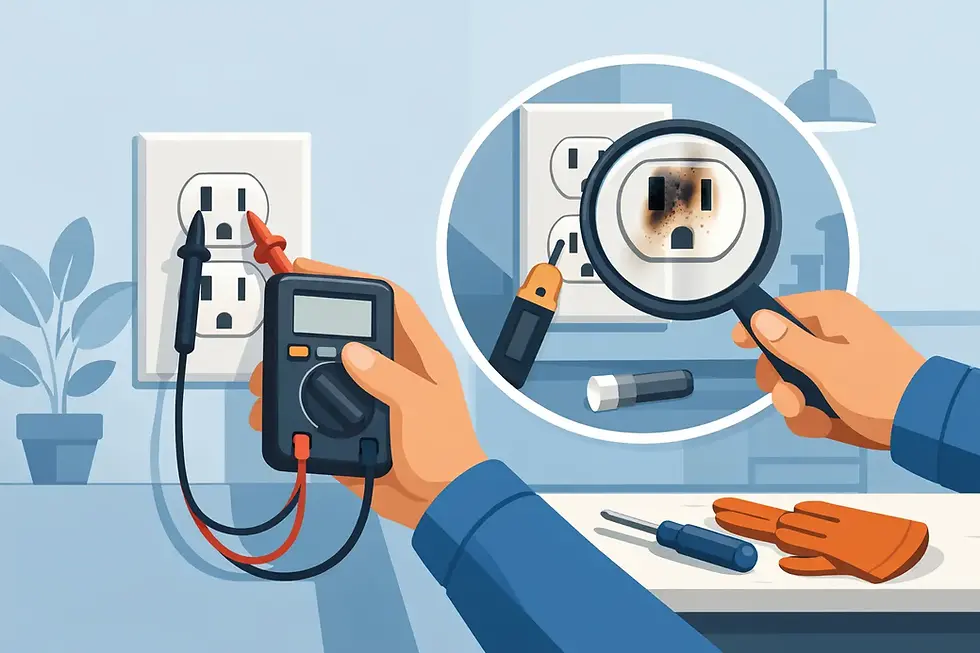
If you have a non-contact voltage tester, use it before touching any conductors. That said, testers are useful screening tools, not substitutes for electrical training. If you are not fully confident about what you are seeing, that is a good point to stop and bring in a licensed electrician.
Older homes can add another layer of uncertainty. Wiring methods, box fill, grounding, and past repairs may not match current standards. A fixture problem in an older home is sometimes the first visible sign of a larger issue behind the walls.
When the switch is the real problem
A dead fixture can actually be a dead switch. Wall switches wear out over time, especially in high-use areas like kitchens, bathrooms, garages, and hallways. If the switch feels loose, makes a faint crackling sound, runs warm, or only works in certain positions, it may be failing.
In some cases, the fixture flickers before going fully dead. Homeowners often assume that means the light is bad, but intermittent power can come from a worn switch or a loose wire connection inside the switch box. That kind of issue should not be ignored. Loose electrical connections can create heat, and heat is where safety concerns begin.
Dimmer switches are another common source of confusion. Not every fixture and bulb combination works well with every dimmer. If a dimmer is incompatible with the lamp type, the fixture may flicker, hum, work inconsistently, or stop turning on altogether. Replacing the fixture without checking the dimmer can waste time and money.
The fixture itself may have failed
Light fixtures do wear out. This is especially common in builder-grade fixtures, older fluorescent units, and fixtures exposed to moisture or heat. Bathrooms, covered patios, laundry rooms, and garages tend to be harder on electrical components than dry interior spaces.
Signs of fixture failure include visible scorching near the socket, brittle wire insulation, corrosion, buzzing, or a burnt smell. If the socket tab inside a lamp holder is damaged or flattened, the bulb may not make contact even though everything looks normal from the outside.
With integrated LED fixtures, failure can be less obvious because there is no replaceable bulb to test. The LED driver or internal electronics may simply stop working. If power is reaching the fixture but the fixture stays dark, replacement is often the practical fix.
There is a trade-off here. Replacing one old fixture may solve the immediate issue, but if several fixtures in the same area are acting up, the problem may be circuit-related rather than fixture-specific. That is why pattern matters. One dead light is different from multiple lights failing together.
Look for GFCI and circuit issues
Homeowners are sometimes surprised to learn that a light fixture may be connected to a GFCI-protected circuit. This can happen in bathrooms, garages, basements, exterior areas, and sometimes even in adjacent rooms, depending on how the home was wired. If a nearby GFCI outlet has tripped, the fixture may lose power until that outlet is reset.
Check GFCI receptacles in the area and press the reset button if needed. If the outlet will not reset, or resets and trips again, that points to a fault that needs further diagnosis.
Circuit problems can also show up as partial outages. Maybe one fixture is dead, one outlet in the room still works, and another device is acting strangely. That kind of mixed behavior can indicate a loose connection upstream, often at a switch box, receptacle, fixture box, or panel connection. These are not ideal DIY situations because the failing connection may be hidden and may affect more than one device.
Warning signs that call for an electrician
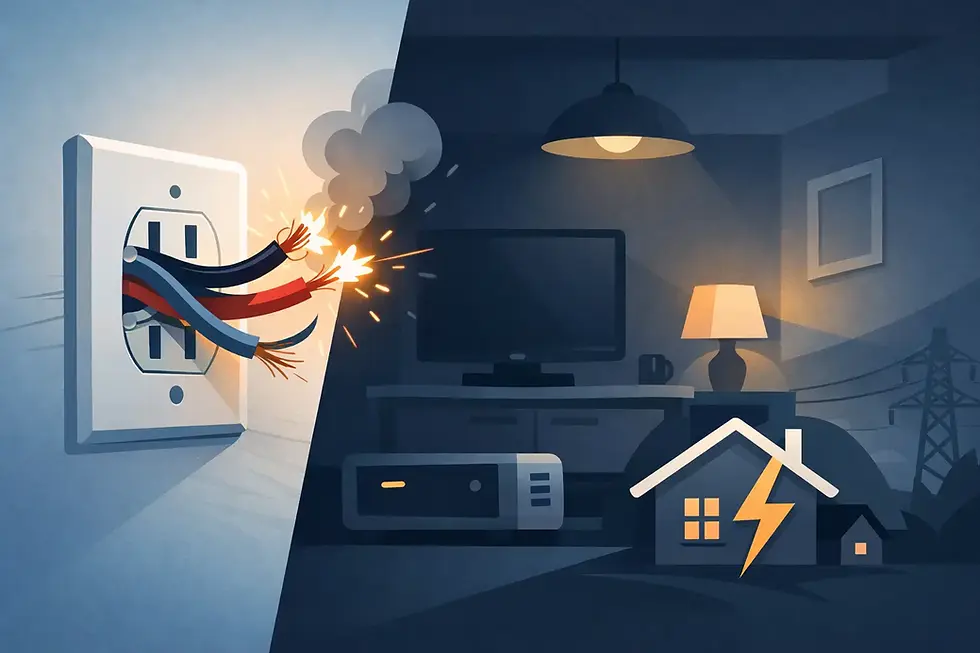
Some fixture problems are straightforward. Others are worth treating as a service call right away. If the fixture stopped working after you noticed flickering, popping, sparking, a burning odor, or breaker trips, it is best not to keep testing it.
The same is true if the ceiling box feels warm, the switch plate is discolored, or the fixture failed after water exposure from a roof leak, bathroom humidity issue, or exterior weather. Water and electricity are a bad combination, and even a small amount of moisture can damage connections over time.
If your home has aluminum branch wiring, older cloth-insulated wiring, or an outdated panel, a dead fixture may be part of a bigger reliability issue. In those cases, repair work should be approached with a full understanding of the system, not just the single device that stopped working.
What a professional diagnosis usually includes
When an electrician diagnoses a dead light fixture, the goal is not just to restore power. The goal is to find the actual failure point and make sure the repair is safe for long-term use. That can include testing for power at the switch and fixture box, checking continuity where appropriate, inspecting terminations, evaluating the fixture condition, and confirming the circuit is behaving normally under load.
Sometimes the solution is a simple switch replacement or fixture swap. Sometimes the issue is a loose neutral in a nearby box, a failed connection in the ceiling, or a problem tied back to the panel. Good troubleshooting avoids guesswork and helps prevent repeat failures.
For homeowners in Omaha, this matters during both repair and upgrade work. If you are already dealing with an outdated light, it may make sense to replace it with something more efficient and better suited to the room rather than repairing an old fixture that is near the end of its life.
Preventing the next dead fixture
Not every failure can be prevented, but a few habits help. Use the correct bulb type and wattage for the fixture. Do not ignore flickering or buzzing. Replace worn switches before they become failure points. If a fixture is installed in a damp or exterior location, make sure it is rated for that environment.
It also helps to pay attention to the bigger picture. If lights dim when appliances start, breakers trip more often than they used to, or multiple devices feel unreliable, the issue may go beyond one fixture. Electrical systems age just like any other part of a home.
That is why fixture troubleshooting is not only about getting the light back on. It is also a chance to catch unsafe wiring, worn devices, or aging components before they turn into a bigger repair. If the simple checks do not solve it, or anything about the fixture seems unsafe, having it looked at by a qualified residential electrician is the smart next step. Proton Electric works with Omaha homeowners every day on problems just like this, with practical repairs that put safety and everyday reliability first.
When a light quits, the goal is not to win a guessing game. It is to make sure your home stays safe, functional, and ready for normal life again.
Comments