
How to Upgrade Kitchen Lighting Right
- Derek Curtis
- 3 days ago
- 6 min read
A kitchen can have brand-new cabinets and clean countertops and still feel dim, awkward, or dated if the lighting is wrong. If you are wondering how to upgrade kitchen lighting, the best place to start is not with fixture styles. It is with how you actually use the room every day - cooking, cleaning, eating, helping kids with homework, or grabbing coffee before work.
Good kitchen lighting should make tasks easier, improve comfort, and help the space feel more inviting. It should also be safe. In many homes, the problem is not a lack of light. It is poor placement, outdated fixtures, or a setup that relies too heavily on one ceiling light in the middle of the room.
How to Upgrade Kitchen Lighting With a Better Plan
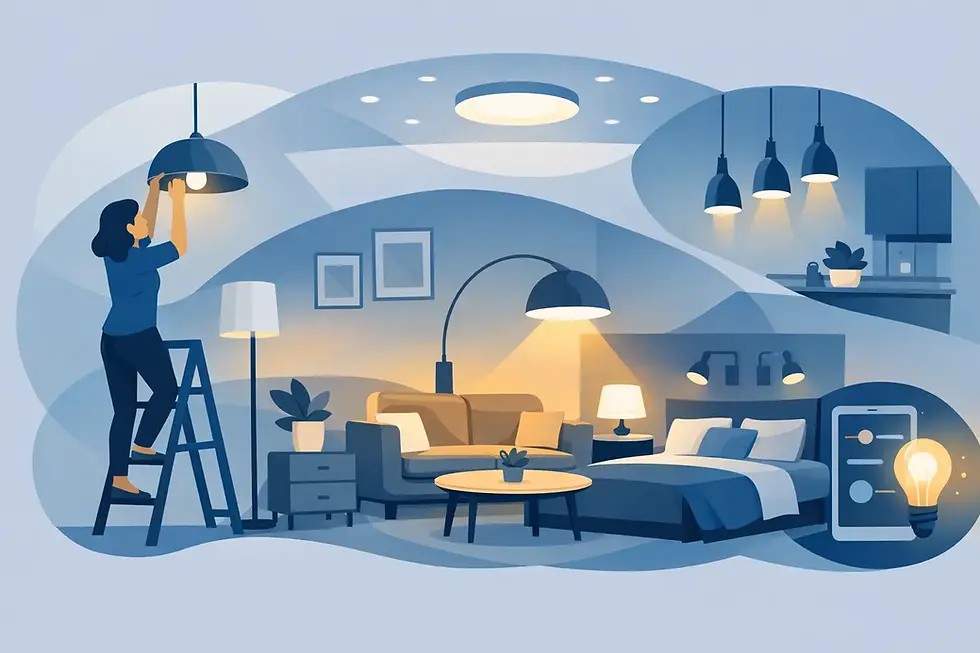
The most effective kitchen lighting upgrades use layers. That means combining general room lighting, focused task lighting, and accent lighting so the whole space works together. When homeowners skip this step, they often end up with bright spots, dark corners, and shadows across counters where they prep food.
Ambient lighting is the base layer. This is what lights the room overall. Recessed lights, flush mounts, or well-placed ceiling fixtures usually handle that job. Task lighting comes next. Under-cabinet lights are one of the biggest improvements you can make because they put light exactly where you chop, read recipes, and use small appliances. Accent lighting is optional, but it can make a big difference in appearance. Toe-kick lighting, interior cabinet lighting, or pendant lights over an island can add warmth and visual balance.
Before picking products, look at your kitchen in zones. Think about the sink, range, island, perimeter counters, pantry area, and eating space. Each area may need a different kind of light. That is where a lot of upgrades go right or wrong. A beautiful pendant may look great over an island, but it will not solve a dark prep area by the wall.
Start by Identifying What Is Not Working
A smart upgrade begins with a simple question: what bothers you about the current lighting? Maybe the kitchen feels gloomy even when every switch is on. Maybe the light over the sink is too weak. Maybe the island fixture hangs too low and blocks sightlines. Or maybe older bulbs give everything a yellow cast that makes the room feel tired.
Once you know the problem, the right fix becomes clearer. If the room feels uneven, you may need more balanced ambient lighting. If counters are hard to work on, task lighting should move to the top of the list. If the kitchen feels dated, replacing one oversized fixture with recessed lights and cleaner pendants may give you a better result than swapping bulbs alone.
This is also the point where homeowners should think about age and condition. Older kitchens sometimes have wiring setups that limit fixture options. In some homes, a lighting project also reveals loose devices, overloaded circuits, or switches that should be replaced while the work is being done. That is one reason electrical planning matters as much as design.
Choose Fixtures That Match the Way the Kitchen Works
There is no single best fixture for every kitchen. It depends on ceiling height, cabinet layout, natural light, and how much open space you have.
Recessed lighting is a strong choice for many kitchens because it provides broad, clean illumination without making the ceiling feel crowded. It works especially well in medium and large kitchens, but placement matters. If recessed lights are spaced poorly, you can still end up with shadows along the counters.
Pendant lighting is popular over islands and peninsulas because it adds style while helping define the center of the room. The trade-off is that pendants are more visible, so size and hanging height need to be right. Fixtures that are too large can overwhelm the room. Fixtures that hang too low can interfere with conversation and sightlines.
Under-cabinet lighting is often the most practical upgrade. It improves visibility where you actually work and can make a kitchen feel more finished. LED options are especially popular because they are energy efficient, low maintenance, and available in different color temperatures.
For over-sink or dining nook areas, a dedicated fixture can make those spaces feel intentional instead of forgotten. In smaller kitchens, replacing one outdated central fixture with a more effective ceiling light plus under-cabinet lighting may be enough to transform the room.
Brightness and Color Matter More Than Many Homeowners Expect
One common mistake in kitchen upgrades is focusing only on fixture appearance and ignoring light output. A fixture can look great and still leave the room underlit.
Brightness is usually measured in lumens. The exact amount your kitchen needs depends on room size and layout, but the bigger point is balance. Too little light makes tasks harder. Too much harsh light can make the room feel cold and uncomfortable.
Color temperature matters too. Measured in Kelvins, this affects whether light appears warm, neutral, or cool. Many homeowners prefer a clean, neutral white in the kitchen because it helps with visibility without feeling too stark. Very warm light may feel cozy, but it can make task areas look dim. Very cool light can feel clinical. A middle range often works best, especially when paired with dimmers.
Dimmers are worth serious consideration in a kitchen. They allow bright light for cooking and cleaning, then a softer setting for evening meals or quiet mornings. That flexibility can make the same kitchen feel more comfortable throughout the day.
How to Upgrade Kitchen Lighting Safely
If your project involves more than changing bulbs or replacing a simple fixture with the same type, safety should stay front and center. Adding recessed lights, installing new switches, upgrading under-cabinet lighting, or changing the layout may require new wiring, box changes, or circuit evaluation.
Kitchens are high-use spaces with a lot of electrical demand. Between appliances, countertop outlets, disposal systems, and lighting, there is not much room for guesswork. If your home is older, this is even more important. An upgrade is a good time to make sure the electrical side of the kitchen is supporting the way the room is used now, not the way it was used twenty or thirty years ago.
That does not mean every lighting project turns into a major electrical job. Sometimes the work is straightforward. But when homeowners want a cleaner layout, more switches, improved control, or added fixtures, professional installation helps ensure the finished result is both attractive and reliable.
Small Upgrades vs. Full Lighting Redesigns
Not every kitchen needs a complete overhaul. In some homes, a few targeted changes deliver most of the improvement.
If the layout already works, replacing outdated fixtures, installing LED recessed lights, and adding under-cabinet lighting can go a long way. Swapping old switches for dimmers is another relatively small change that improves daily use.
A full redesign makes more sense when the room has persistent dark spots, poor fixture placement, or a layout that changed over time. For example, if an island was added after the original lighting was installed, the current setup may no longer make sense. The same goes for kitchens with one central fixture trying to light the entire space.
For Omaha homeowners planning a broader kitchen refresh, it often makes sense to address lighting early. Cabinets, backsplashes, and paint get more attention, but lighting affects how all of those finishes actually look in the room.
What to Expect From a Professional Upgrade
A professional approach usually starts with evaluating the current setup, identifying problem areas, and matching lighting recommendations to the kitchen layout. That includes fixture placement, switch control, light type, and any electrical updates needed to support the plan.
For homeowners, that means fewer surprises. It also helps avoid the common result of buying fixtures first and realizing later that the lighting pattern still does not work. A service-focused electrician can help you weigh practical questions like brightness, spacing, dimming options, and whether your panel or existing wiring should be reviewed as part of the project.
For local homeowners, Proton Electric handles residential lighting upgrades with that kind of practical focus - improving function, safety, and day-to-day comfort without overcomplicating the process.
The best kitchen lighting does not call attention to itself every second. It simply makes the room easier to live in, easier to work in, and better suited to the way your household actually uses it.


Comments